






In this article, we will cover
- Estimate daily reusable diaper needs
- Plan newborn cloth diaper changes
- Calculate cloth diaper kit costs
- Compare newborn and freesize diapers
- Build a practical starter kit
Buying too few cloth diapers can leave you waiting for laundry, while buying too many before understanding your routine can strain your budget. The right number depends on your baby's age, changing frequency, washing schedule and whether you use cloth diapers full-time or part-time.
How many cloth diapers do you need?
Most families can start planning around 20–24 newborn cloth diapers for full-time use, particularly when washing every two days. A smaller collection may work with daily washing or part-time use, while newborns and families who wash less frequently may need more.
The ideal number is not fixed. It depends on how many changes your baby needs each day and how quickly used diapers can be washed, dried and returned to the rotation.
|
Usage pattern |
Suggested starting quantity |
|
Part-time cloth diapering |
6–10 |
|
Full-time use with daily washing |
14–18 |
|
Full-time use with washing every 2 days |
20–24 |
|
Full-time use with washing every 3 days |
24–30 |
These are planning estimates, not medical or product-specific requirements. Adjust them to your baby's actual changes, drying time and laundry routine.
Why do parents often buy too many or too few?
It is tempting to calculate only the number of diapers used in a day. However, diapers also need time for washing and drying. A rainy spell, slow-drying inserts or an unexpectedly busy day can reduce the number of clean diapers available.
The better approach is to calculate your daily usage first, then add enough stock to cover laundry and a small reserve.
How many cloth diapers does a newborn need?
Newborns typically need around 10–12 diaper changes per day, although individual needs vary. For full-time cloth diapering, a collection of approximately 24–30 diapers can offer more flexibility when washing every two days or when drying takes longer.
Newborn cloth diapers deserve separate consideration because babies grow quickly, need frequent changes and may not yet fit adjustable freesize designs comfortably.
For newborn reusable diapers, plan around:
- Frequent changes throughout the day and night.
- Extra diapers for bowel movements and unexpected leaks.
- Time for inserts and diaper shells to dry completely.
- A newborn-specific fit for smaller babies.
What parents should know
A newborn kit is a temporary size-specific investment if your chosen diaper does not adjust to later growth. Estimate how long you expect to use the newborn size before deciding how many to purchase.
What affects your diaper count?
Four everyday factors make the biggest difference.
1. Your baby's age
Younger babies generally need more frequent changes. As babies grow, the number of daily changes may decrease, though bowel movements, feeding patterns and individual needs still matter.
2. Your washing schedule
Washing daily means fewer diapers need to be in circulation. Washing every two or three days requires a larger collection, including enough clean stock while the previous load dries.
3. Your climate and drying space
In many Indian homes, monsoon humidity, limited balcony space or indoor drying can slow laundry. Keep a few extra diapers if drying is unpredictable.
4. Full-time or part-time use
If you use cloth during the day and disposable diapers for some outings or overnight periods, your cloth diaper requirement will be lower than for full-time use.
Expert guidance
The Indian Academy of Paediatrics recommends frequent diaper changes to help prevent diaper dermatitis, with the interval adjusted to the baby's age and needs. The practical takeaway is to plan your kit around timely changes, not around stretching each diaper for longer.

How to calculate your cloth diaper kit
You can estimate your requirements with a simple formula.
Daily diaper changes × days between washes + reserve = total kit size
For example, if your baby needs eight changes a day, you wash every two days and keep four spare diapers:
- Daily use: 8 diapers
- Two days of use: 8 × 2 = 16 diapers
- Spare stock: 4 diapers
- Estimated total: 20 cloth diapers
This is a planning example, not a recommendation to delay changing a wet or soiled diaper.
If you're new to cloth diapering, consider starting with a smaller trial collection, especially if you are unsure about fit, absorbency or your washing routine. Observe how many changes your baby needs and how quickly your diapers dry before expanding the kit.
For twins or two children in diapers, calculate each child's daily use separately and add the totals. Shared laundry does not reduce the number of changes each child needs.
How much does a cloth diaper kit cost?
The total cost depends on your chosen diaper type, number of diapers, additional absorbency and washing expenses. Rather than comparing only the upfront price, calculate the cost of the complete kit and consider how many times each diaper can be reused.
Use this formula:
Total initial cost = (number of diapers × price per diaper) + accessories
For example, a hypothetical 24-diaper kit at ₹700 per diaper would cost ₹16,800 before accessories. This is an illustration, not a current product price.
|
Cost factor |
What to include |
|
Diapers |
Number needed × price per diaper |
|
Extra absorbency |
Boosters or additional inserts, if required |
|
Laundry supplies |
Detergent, water and electricity |
|
Accessories |
Wet bags or liners, if used |
|
Replacement needs |
Worn elastics, damaged shells or additional sizes |
How do you compare cost per use?
Divide the purchase price by the number of uses you actually get from the diaper.
For example, a diaper costing ₹700 and used 300 times has an illustrative purchase cost of about ₹2.33 per use, excluding washing and accessories.
Reusable diapers can offer long-term savings when used repeatedly, but actual savings depend on the initial kit cost, laundry expenses, product lifespan and how much you would otherwise spend on disposables.
How to choose the right cloth diapers
The best cloth diapers for your family are the ones that fit your baby properly, suit your washing routine and provide the absorbency you need for the intended use.
|
Option |
Best suited for |
What to consider |
|
Newborn-sized cloth diapers |
Smaller babies in the early months |
Snug fit and limited size range |
|
Freesize reusable diapers |
Babies within the stated weight range |
Fit, adjustability and growth |
|
Cloth diapers with boosters |
Babies who need additional absorbency |
Added bulk and drying time |
|
Mixed cloth and disposable use |
Families wanting flexibility |
Lower cloth diaper quantity, but ongoing disposable costs |
Before choosing, check the weight range, fastening system, absorbent insert, washing instructions and whether the diaper is intended for daytime use or overnight use. A diaper's absorbency does not mean it should be left on for a fixed number of hours. Change promptly after a bowel movement and check regularly for wetness and comfort.
The NHS also advises changing babies promptly after they wet or soil a diaper to help prevent soreness.
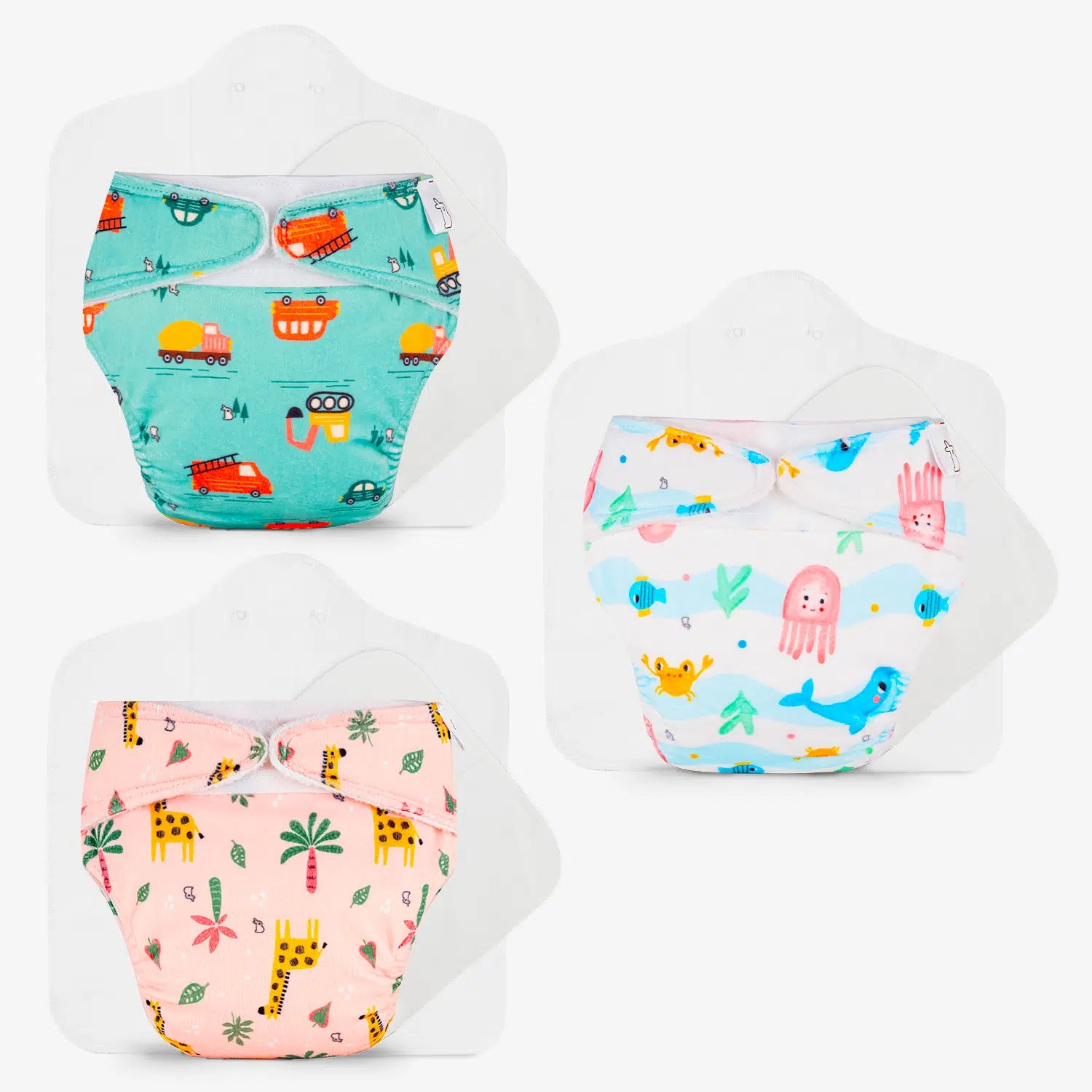
💡 SuperBottoms PickOnce you've worked out your daily needs and preferred fit, you can consider these two options for different stages. Newborn UNO Luxe - Designed for babies aged 0–3 months and weighing approximately 2.5–7 kg. Its newborn-specific sizing and Velcro fastening make it an option to consider for the early months. Explore: Newborn UNO Luxe Freesize UNO - Designed for babies aged approximately 3 months to 3 years and weighing 5–17 kg. Its adjustable design can suit families looking for a reusable diaper option as their baby grows. Explore: Freesize UNO Luxe |
Choose based on your baby's current weight and fit rather than age alone. Check the product listing for the latest specifications and care instructions before purchasing.
What is the practical solution?
Problem: Running out of clean diapers between washes can make cloth diapering difficult to maintain.
Solution: Estimate daily changes, multiply by the number of days between washes and add a small reserve.
Why it helps: You can plan a manageable starter kit without buying more than your routine requires.
Parent checklist
- Estimate your baby's daily diaper changes.
- Decide how often you can wash.
- Account for drying time and rainy days.
- Check the diaper's weight range and fit.
- Budget for inserts, boosters and laundry.
- Keep enough clean diapers for unexpected changes.
- Review your requirements as your baby grows.

Key takeaways
- Calculate your kit using daily changes and wash frequency.
- Keep extra stock for drying delays and unexpected changes.
- Choose diapers based on fit, absorbency and your baby's current stage.
FAQs
How many cloth diapers do I need for a newborn?
Plan for approximately 24–30 diapers for full-time use with washing every two days, adjusting for daily changes and drying time.
How many hours can cloth diapers be used?
There is no universal wear duration. Change promptly after a bowel movement, check regularly for wetness and follow the product's guidance rather than relying on a fixed-hour target.
Are reusable diapers cheaper than disposable diapers in India?
They can cost less over time because they can be washed and reused. Compare the complete kit cost, laundry expenses and expected lifespan against your disposable diaper spending.
Can I use newborn cloth diapers for older babies?
Only if the product's fit and weight range allow it; a dedicated newborn diaper may be outgrown, while a freesize option can accommodate a wider weight range.
Message from SuperBottoms
Hi there, new parents! SuperBottoms brings you doctor-recommended cloth diapers, a trusted rash-free diapering solution specially designed for your baby's sensitive, delicate skin.
From Newborn UNO and Regular UNO to UNO Luxe, SuperBottoms offers reusable diapering solutions for every stage of your child's growth.
Our range also includes Diaper Pants, DryFeel langots for diaper-free time, Padded Underwear for potty training, as well as SuperSoft Underwear, Cycling Shorts and Joggers for growing kids.
Our collection also includes Period Underwear and bladder-leak solutions for women, along with everyday baby-care essentials.
SuperBottoms products also make thoughtful gifts for babies and new parents - practical, reusable and designed around the real needs of parents.
SuperBottoms products are now available on Amazon, Flipkart, FirstCry, Myntra, Nykaa, Blinkit, and Zepto.