






In this article, we will discuss
- Overnight cloth diapers need adequate absorbency
- Heavy wetters may need extra layers
- Fit affects overnight leak prevention
- Nighttime changes depend on individual needs
- Cloth diaper routines support comfortable sleep
A cloth diaper that works perfectly during the day may leak before morning. The reason isn't always poor quality or an incorrect size; nighttime use involves longer stretches, different sleeping positions and more urine accumulating in one diaper.
If you're wondering whether cloth diapers can last 12 hours overnight, the answer depends on your baby's needs, the diaper's absorbency and your nighttime changing routine.
Can cloth diapers last 12 hours at night?
Cloth diapers may last through a 12-hour night for some babies, but this cannot be guaranteed. Their performance depends on how much your baby urinates, the absorbent material and number of layers, the fit around the legs and waist, and whether the diaper is designed for extended wear.
For some babies, a well-fitted cloth diaper with sufficient absorbency may work for a longer stretch. Others, particularly heavy wetters, may need a different absorbency setup or a diaper change during the night.
Before aiming for 12 hours, consider three things:
- Absorbency: Can the diaper hold your baby's urine without becoming saturated?
- Fit: Are the leg openings and waist snug without digging into the skin?
- Skin comfort: Is the diaper staying wet against your baby's skin for too long?
There is no universal duration for overnight cloth diapering. A baby's diaper needs depend on age, urine output, absorbency and fit. Parents should prioritise skin comfort, leak prevention and timely diaper changes rather than aiming for a fixed 12-hour wear time.
Expert reference
Dr R. Madhu and colleagues, Indian Academy of Paediatrics Guidelines for Paediatric Skin Care, Indian Paediatrics, 2021. The guideline recommends frequent diaper changes to help prevent diaper dermatitis.
Note - There is no universal duration for overnight cloth diapering. A baby's diaper needs depend on age, urine output, absorbency and fit. Parents should prioritise skin comfort, leak prevention and timely diaper changes rather than aiming for a fixed 12-hour wear time.
Why does overnight diapering feel confusing?
During the day, parents can notice wetness and change a diaper promptly. At night, waking a sleeping baby may feel disruptive, but leaving a saturated diaper on for too long can cause discomfort and contribute to skin irritation.
The goal isn't simply to find the diaper that holds the most liquid. It's to find a setup that suits your baby's needs while keeping their skin comfortable.
Why do cloth diapers leak overnight?
Newborn Cloth diapers usually leak when urine reaches the absorbent material's capacity, escapes through a gap or cannot soak in quickly enough. Identifying the cause helps you adjust the setup instead of replacing every diaper.
Common reasons include:
- Saturation: The absorbent pad has reached its limit.
- Poor fit: Gaps around the thighs or waist allow urine to escape.
- Compression leaks: Pressure from a sleeping position can push absorbed urine out of a saturated pad.
- Slow absorption: Urine arrives faster than the absorbent layers can take it in.
- Reduced absorbency: Fabric softener, detergent buildup or an unsuitable wash routine may affect performance.
What parents should know
Adding more absorbent layers may help a heavy wetter, but extra bulk can affect the fit. Check that the diaper closes comfortably, the absorbent material sits correctly and the leg openings remain snug.

How long do cloth diapers last?
The answer depends on whether you're asking about a diaper's wear time or its reusable lifespan.
For how long cloth diapers last between changes, no fixed number of hours applies to every baby. Daytime wear, overnight use and individual urine output all affect how frequently a diaper needs changing.
For how long cloth diapers last before replacement, care, washing frequency, fabric condition and product construction matter. Reusable diapers can be used repeatedly when properly maintained, but absorbent inserts and waterproof layers may wear differently over time.
|
Factor |
What it means for parents |
|
Daytime use |
More frequent checks and changes are practical |
|
Overnight use |
Greater absorbency may be needed |
|
Heavy wetting |
A standard daytime setup may not be sufficient |
|
Newborn stage |
Frequent feeding and elimination mean frequent changes |
|
Repeated use |
Follow washing instructions and check for wear |
Newborns need particularly frequent attention. As the NHS explains, changing wet or dirty nappies promptly helps reduce the risk of nappy rash.
How to use cloth diapers overnight
To make overnight cloth diapering work better, start with the right fit and absorbency rather than simply fastening the diaper more tightly. Then observe how it performs over several nights.
- Start with a fresh diaper. Put on a clean, fully prepared diaper at bedtime.
- Check the fit. Ensure the leg openings sit neatly against the skin without being too tight.
- Assess absorbency. If the diaper repeatedly becomes saturated, explore a suitable additional absorbent layer designed for that diaper.
- Check for leaks. Notice whether wetness appears at the legs, waist or through the fabric.
- Review your results. A consistently soaked insert suggests a different problem from a diaper that leaks despite having unused absorbent capacity.
Avoid adding random inserts or doubling layers without checking compatibility. A bulky diaper can create gaps, and not every insert works equally well with every diaper.
What to look for
The best overnight cloth diapers combine suitable absorbency, a secure fit and comfortable materials. A diaper that holds more liquid but leaves gaps around the legs may still leak, so evaluate the complete setup rather than absorbency alone.
Is it safe to leave a cloth diaper on for 12 hours?
A 12-hour target should not override your baby's skin needs. If the diaper becomes wet or dirty, change it as soon as possible, especially if your baby has sensitive skin or an existing rash. Contact with urine and stool for prolonged periods can contribute to irritation.
If your baby develops persistent redness, discomfort or worsening rash, seek advice from a healthcare professional. The NHS recommends prompt changes, gentle cleaning and appropriate skin care to help prevent and manage nappy rash.
Which overnight diaper option is right for your baby?
The right choice depends on your baby's age, size, wetting pattern and the absorbency you need. A newborn-sized diaper and an adjustable diaper for an older baby serve different stages, and neither should automatically be assumed to last 12 hours.
|
Option |
Best suited for |
What to consider |
|
Standard cloth diaper setup |
Babies whose usual absorbency meets their needs |
May need adjustment for overnight use |
|
Cloth diaper with a compatible booster |
Babies who need additional absorbency |
Check fit and compatibility |
|
Disposable nighttime diaper |
Families who prefer a disposable option overnight |
Check fit, absorbency and changing needs |
|
Separate daytime and nighttime setups |
Babies who wet more heavily at night |
Requires planning and extra supplies |
There is no single best overnight cloth diaper for every baby. Compare how each option performs for your child rather than relying on a product label alone.
What should parents look for when choosing cloth diapers for heavy wetters?
Look beyond claims about how many pees a diaper can hold. Absorbency descriptions are useful starting points, but actual performance varies with urine output, fit and the way the diaper is used.
Consider these five factors:
- Absorbency: Choose a setup suited to your baby's typical wetting pattern.
- Comfort: Look for soft materials and a fit that allows comfortable movement.
- Skin contact: Consider how the inner layer feels against your baby's skin and change promptly when needed.
- Washability: Follow the care instructions to maintain absorbency and the waterproof outer layer.
- Long-term value: Compare the purchase price, additional inserts, washing needs and expected reusable lifespan.
For Indian families comparing reusable and disposable nappies, cost per use can also be useful. Reusable diapers require an initial purchase and ongoing washing, so actual savings depend on how frequently they're used and maintained.
Which SuperBottoms cloth diaper suits your baby's stage?
Once you understand the features that matter, you can compare newborn-specific and adjustable designs. SuperBottoms offers two relevant options for different stages of early parenthood.
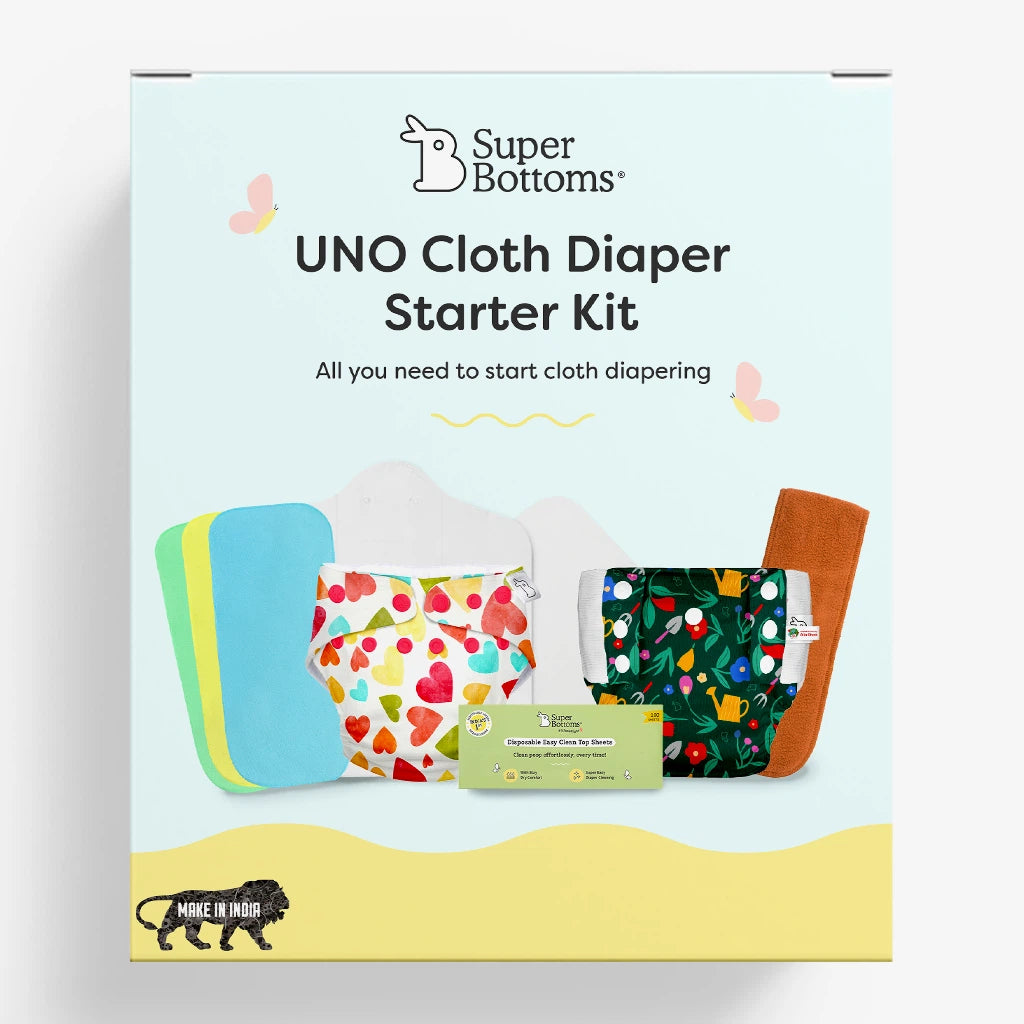
💡 SuperBottoms PickNewborn UNO - Designed for babies aged 0–3 months and weighing approximately 2.5–7 kg, Newborn UNO has a newborn-specific fit, a waterproof outer and a Dry Feel Magic Pad with a stay-dry layer. It's intended for the newborn stage, when frequent diaper checks and changes are particularly important. Explore the Newborn UNO collection.
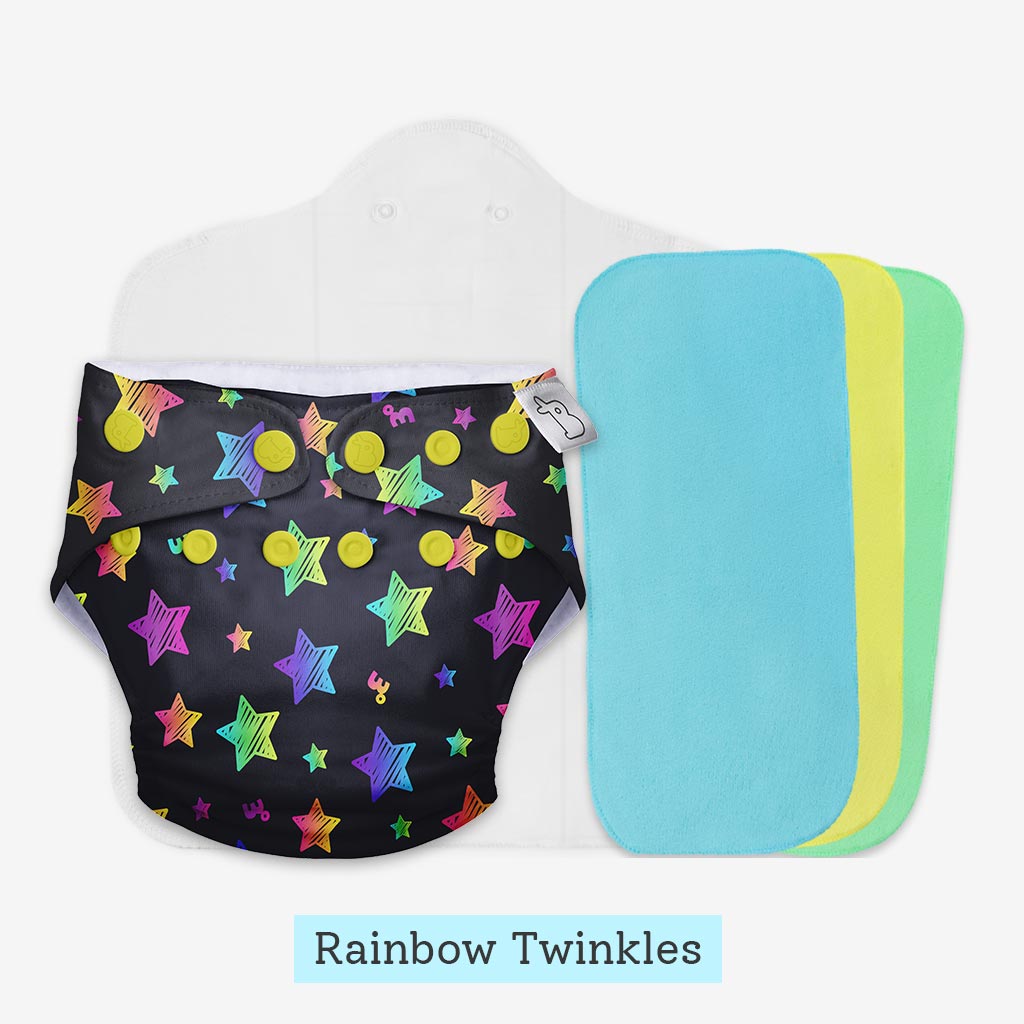
Freesize UNO - Designed for babies approximately 3 months to 3 years old, Freesize UNO uses an adjustable fit that grows with your baby. Its Dry Feel Magic Pad absorbs urine, while the waterproof outer helps contain leaks when the diaper is fitted correctly. Explore the Freesize UNO Luxe collection. |
A practical limitation: Neither option should be assumed to last 12 hours on every baby. If your baby is a heavy wetter, evaluate the absorbency needed for your child's overnight routine and follow the product's usage guidance.
What is the practical solution for heavy wetting?
Problem: Your baby's cloth diaper is repeatedly leaking or becoming saturated before morning.
Solution: Check the fit, inspect the absorbent pad after use and consider a compatible booster or a different nighttime option if needed.
Why it helps: Understanding where and why a leak occurs helps you make a targeted change instead of buying multiple diapers without knowing what needs to improve.
Relevant SuperBottoms product: Freesize UNO may suit babies aged 3 months to 3 years who need an adjustable cloth diaper for everyday use. Newborn UNO is designed for the smaller newborn stage.
A practical overnight diapering routine
A consistent routine helps you understand what works for your baby without making bedtime complicated.
- Before bed: Clean and dry your baby's diaper area, then put on a fresh diaper.
- During the night: Check and change the diaper when needed, including after a bowel movement.
- In the morning: Inspect the diaper for saturation, leaks and any signs of skin irritation.
- After washing: Follow the manufacturer's washing and drying instructions. Avoid fabric softener, which can reduce absorbency in cloth diapers.
- Adjust if needed: If leaks continue, review the fit and absorbency before trying a different setup.

Parent checklist
- Choose the correct diaper size.
- Check the fit around the legs and waist.
- Assess absorbency for your baby's wetting pattern.
- Keep clean diapers and spare bedding handy.
- Change wet or dirty diapers promptly.
- Check your baby's skin regularly.
- Review your routine if leaks persist.
Choosing nighttime diapers is ultimately about finding a balance between absorbency, fit and skin comfort. Start with a setup suited to your baby's age, observe how it performs, and adjust when necessary. If a cloth diaper doesn't comfortably meet your baby's overnight needs, a different setup may be more appropriate than trying to make one diaper last a fixed number of hours.
Key takeaways
- Don't assume 12 hours: Overnight wear time varies by baby and diaper setup.
- Investigate recurring leaks: Check saturation, fit and absorbency before changing products.
- Prioritise skin comfort: Change wet or dirty diapers promptly and monitor for irritation.
FAQs
1. How long do cloth diapers last overnight?
It varies with the baby's urine output, diaper absorbency and fit. Some setups may last through a longer stretch, while others require a change sooner.
2. Can cloth diapers last 12 hours for heavy wetters?
Not reliably for every baby. Heavy wetters may need additional compatible absorbency, a different diapering setup or a change during the night.
3. How can I stop cloth diapers from leaking at night?
Check the fit around the legs and waist, inspect whether the absorbent pad is saturated, and consider a compatible booster if appropriate. Avoid adding so much bulk that the diaper no longer fits securely.
4. Is Freesize UNO suitable for overnight diapering?
Freesize UNO Diaper is designed for babies aged approximately 3 months to 3 years and can be considered for nighttime use. Whether it lasts through your baby's entire night depends on individual wetting patterns, fit and absorbency needs.
Message from SuperBottoms
Hi there, new parents! SuperBottoms brings you doctor-recommended cloth diapers, a trusted rash-free diapering solution specially designed for your baby's sensitive, delicate skin.
From Newborn UNO and Regular UNO to UNO Luxe, SuperBottoms offers reusable diapering solutions for every stage of your child's growth.
Our range also includes Diaper Pants, DryFeel langots for diaper-free time, Padded Underwear for potty training, as well as SuperSoft Underwear, Cycling Shorts and Joggers for growing kids.
Our collection also includes Period Underwear and bladder-leak solutions for women, along with everyday baby-care essentials.
SuperBottoms products also make thoughtful gifts for babies and new parents - practical, reusable and designed around the real needs of parents.
SuperBottoms products are now available on Amazon, Flipkart, FirstCry, Myntra, Nykaa, Blinkit, and Zepto.