






About Ms Sakshi Patil (Author)

Ms Sakshi Patil is the Consultant Child Psychologist at BabySteps Pediatric Development Centre, supporting children and families through behavioural, emotional, developmental, and learning concerns. She follows a child-centred and family-focused approach, helping children build confidence, emotional regulation, and essential life skills through evidence-based interventions.
In this article, we will talk about:
- Name and validate children’s emotions
- Model healthy emotional responses
- Build emotional skills through connection
- Set boundaries with empathy
- Encourage independence and resilience
A child who cries, gets angry, or struggles with disappointment is not necessarily an emotionally unhealthy child. Emotional development in children is a gradual process, and everyday interactions with parents help children learn what their feelings mean and how to respond to them.
The goal isn't to raise a child who never experiences difficult emotions. It is to help them understand those emotions, express them safely and know when to seek support.
How can parents support emotional development?
Parents can support a child's emotional development by creating safe relationships, naming and validating feelings, modelling healthy coping, setting consistent boundaries and giving children age-appropriate opportunities to solve problems. These skills develop gradually through repeated everyday interactions rather than through one-off lessons.
1. Help children name their feelings
Young children often experience emotions before they have the vocabulary to explain them. Instead of simply saying, “Stop crying,” try putting the experience into words:
- “You seem disappointed that we have to leave.”
- “You look frustrated because the toy isn't working.”
- “You seem worried about meeting someone new.”
Naming emotions helps children connect what they feel with what is happening.
What Parents Should Know
Validating an emotion does not mean approving every behaviour. You can acknowledge a child's anger while still setting a boundary around hitting, shouting or throwing things.
2. Listen before correcting
When children share something difficult, parents can feel tempted to immediately explain, solve or correct it. Sometimes the more helpful first step is simply listening.
Put distractions aside, ask an open-ended question and let your child finish speaking before offering advice. Feeling heard can make it easier for children to communicate openly in the future.
Try:
“Tell me what happened.”
“What were you feeling then?”
“What do you think would help?”
3. Model the emotions you want to teach
Children learn emotional skills partly by watching adults. That does not mean parents need to stay calm all the time.
Instead, show what healthy emotional management can look like:
- “I'm getting frustrated, so I'll take a minute.”
- “I shouldn't have shouted. I'm sorry.”
- “I'm worried, but let's work out what we can do.”
Expert insight: Dr Prachi Shah, MD, FAAP, describes emotion coaching as noticing a child's feelings, helping name them, acknowledging them and then addressing the child's needs.
4. Give children small chances to solve problems
Protecting children from every disappointment can unintentionally reduce opportunities to practise coping and problem-solving.
Offer age-appropriate choices instead:
- “Which shirt would you like to wear?”
- “What could we try next?”
- “Would you like help or another chance yourself?”
UNICEF recommends clear, realistic expectations and simple choices as ways to support young children's developing independence.
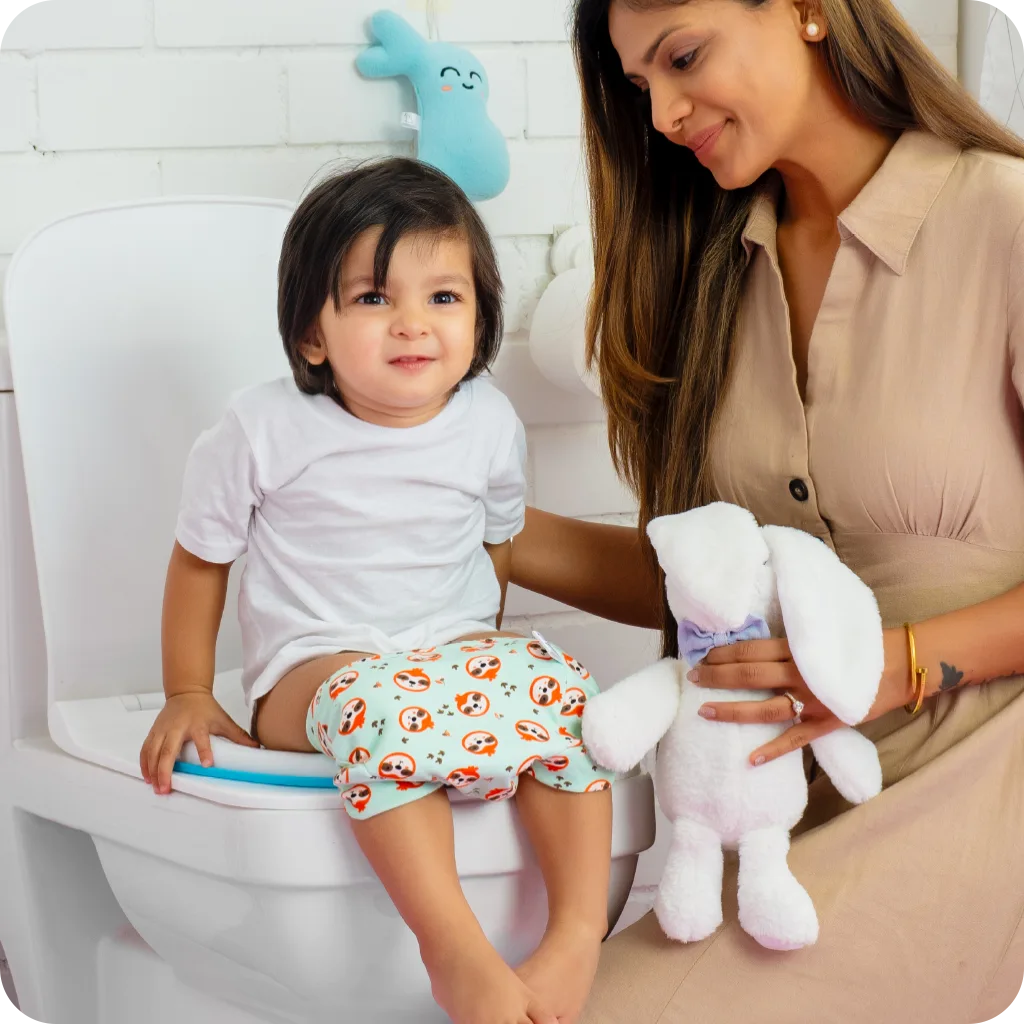
Everyday independence can start with small routines. Letting a child choose what to wear, pull their own clothing up or down, or participate in getting dressed gives them simple opportunities to practise decision-making and self-help skills. For toddlers who are working towards toilet independence, SuperBottoms Padded Underwear offers a pull-up style that allows children to practise dressing themselves while providing protection for small daytime accidents. It is designed for children aged 9 months to 4 years and can hold up to one pee, making it suitable for daytime potty-training and diaper-free time.

5. Make connection part of the routine
Emotional health is built through relationships, not only conversations about feelings.
Simple habits can create connection:
|
Everyday habit |
What it can support |
|---|---|
|
Bedtime conversation |
Open communication |
|
Family meals |
Regular check-ins |
|
Reading together |
Empathy and perspective |
|
Uninterrupted play |
Connection and confidence |
|
Daily routines |
Predictability and security |
UNICEF India similarly highlights talking, listening, playing, storytelling and affectionate interactions as valuable parts of children's development.
6. Set boundaries without dismissing feelings
Children need both warmth and limits. Saying “I know you're angry, but I won't let you hit your brother” communicates two things at once: the emotion is understood, and unsafe behaviour is not acceptable.
Avoid making the child feel that having an emotion is itself wrong. Focus on helping them find a safer way to express it.
Expert Answer:
Healthy emotional development does not mean eliminating anger, sadness or fear. Children need opportunities to experience these emotions while learning, with adult support, how to manage and express them safely.
7. Practise empathy in everyday situations
Empathy becomes easier to understand when children can connect it to real experiences.
Ask:
- “How do you think your friend felt?”
- “What might they have needed?”
- “What could we do differently next time?”
Books, pretend play and everyday conflicts can all become opportunities to discuss different perspectives.
8. Teach coping skills when children are calm
A child in the middle of a meltdown may not be ready for a long lesson. Practise coping strategies during calm moments so they become familiar.
Depending on the child's age, these might include:
- Taking slow breaths
- Asking for a break
- Drawing or talking about the feeling
- Moving to a quiet space
- Seeking help from a trusted adult
The aim is not to force children to “calm down” immediately, but to gradually build a toolbox of strategies they can use.
Parent Checklist
☐ Name feelings without judgement
☐ Listen before giving advice
☐ Model healthy coping
☐ Keep boundaries clear
☐ Offer age-appropriate choices
☐ Make time for daily connection
☐ Encourage empathy
☐ Practise coping skills when calm
What does an emotionally healthy child look like?
An emotionally healthy child will still have tantrums, worries, sadness and frustration. The more useful signs are that, over time and in an age-appropriate way, they can increasingly communicate feelings, seek support, recover from manageable setbacks and build relationships with others. Emotional development is ongoing throughout childhood and adolescence.
If intense or prolonged emotional difficulties significantly affect a child's relationships, family life, school or everyday functioning, parents can discuss their concerns with a paediatrician or qualified mental-health professional.
Raising emotionally healthy children does not require perfect parenting. It happens through repeated moments of listening, connection, boundaries, modelling and guided problem-solving.
The most useful question is not “How do I stop my child from having difficult emotions?” but “How can I help my child understand and manage them?”
Key Takeaways
- Feelings need guidance, not punishment.
- Children learn emotions by watching you.
- Connection builds emotional security and resilience.
FAQs
How can I raise an emotionally healthy child?
Listen to your child's feelings, validate emotions, model healthy coping and maintain consistent boundaries. Give children age-appropriate opportunities to make choices and solve problems.
What are ways to build emotional intelligence in children?
Help children name emotions, talk about what caused them, practise coping strategies and consider how other people may feel.
How can I support a child's emotional development at home?
Build small habits such as daily conversations, shared play, reading, family meals and calm discussions after difficult moments.
Is it normal for children to have big emotions?
Yes. Anger, sadness, fear and frustration are normal parts of growing up. What matters is gradually helping children learn safer and more effective ways to understand and manage those emotions.