





Let us understand the following topics in this article:
- Understand reusable diaper washing
- Follow a simple wash routine
- Prevent cloth diaper odour
- Choose baby-friendly laundry care
Washing cloth diapers doesn't have to mean hours of scrubbing or a separate laundry routine every day. The secret is knowing how to remove waste, store used diapers safely, and wash them thoroughly without damaging their absorbent layers.
Why Does Washing Cloth Diapers Matter?
A reliable cloth diaper wash routine helps remove urine, faecal matter, detergent residue and odour-causing buildup. It also helps preserve absorbency and fabric quality, allowing reusable cloth diapers to remain comfortable and functional over repeated washes.
Unlike disposable nappies, washable diapers need care after every use. For new parents, the confusing part is often knowing whether to rinse immediately, how to store a dirty diaper, which detergent to choose and how frequently to wash.
The good news? A consistent routine is more useful than a complicated one. You do not need to soak every diaper for hours or use a different cleaning product for every stain.
What parents should know
Hygiene depends on effective cleaning, appropriate storage and complete drying. A diaper that smells clean but retains detergent or soil residue may still need a better wash routine.
How to Wash Cloth Diapers Step by Step
The best way to wash cloth diapers is to remove solid waste, store used diapers in a ventilated or suitable dry-storage system, run an initial wash and follow with a thorough main wash using an appropriate detergent. Dry every component completely before reuse.
Step 1: Remove the waste
For diapers containing solid poop, dispose of the waste in the toilet before washing. Follow the diaper manufacturer's instructions for removing any remaining residue. Pee-only diapers can generally go straight into the storage container.
Wash your hands thoroughly after handling soiled diapers.
Step 2: Store used diapers safely
Keep used diapers in a dedicated dry diaper pail or breathable, washable storage system until laundry day. Do not leave them soaking in a bucket of water or store them in an airtight container for extended periods.
Wash frequently enough to prevent prolonged storage of soiled items. A practical starting point for many families is every one to two days, adjusting to the number of diapers used, the climate and the manufacturer's instructions.
Step 3: Run a pre-wash
A short pre-wash or rinse cycle helps remove urine and surface soil before the main wash. Use the settings and detergent quantity recommended for your diaper type and washing machine.
Step 4: Run the main wash
Wash the diapers with an effective laundry detergent in a cycle suitable for their materials. Use enough detergent for the load size and local water conditions. Avoid overcrowding the machine, as the diapers need room to move for effective cleaning.
Step 5: Rinse and inspect
Check the diapers after washing. They should not have a strong urine or ammonia-like smell, visible soil or obvious detergent residue. If they do, review the detergent amount, load size, water hardness and wash settings.
Step 6: Dry completely
Line-dry in sunlight when practical, or use a dryer if the care label permits it. Sunlight can help fade some stains, but it does not replace proper washing. Allow inserts and absorbent pads to dry completely before storing them.

Hand Wash or Machine Wash?
Both methods can work when performed thoroughly. The better option depends on your household's time, water access, machine availability and the diaper's care instructions.
|
Factor |
Hand washing |
Machine washing |
|
Convenience |
More hands-on effort |
Less manual effort |
|
Water use |
Depends on rinsing habits |
Depends on machine and cycle |
|
Cleaning consistency |
Depends on technique |
Depends on settings and loading |
|
Best suited to |
Homes without a suitable machine |
Families with regular laundry access |
How to hand-wash cloth diapers
- Remove solid waste and rinse off visible residue.
- Wash using suitable detergent and clean water.
- Gently rub the fabric against itself; avoid harsh scrubbing or stiff brushes.
- Rinse thoroughly until the detergent is removed.
- Dry completely before reuse.
Follow the product's care instructions, especially for waterproof outer layers and elastic components.
How to machine-wash cloth diapers
- Run a short pre-wash or rinse cycle.
- Run a full main wash with the appropriate detergent dose.
- Ensure the load is not overcrowded and the cycle provides adequate cleaning.
- Dry according to the manufacturer's instructions.
Expert guidance
Dr. Aaron E. Carroll, MD, MS, a paediatrician and health services researcher, emphasises the importance of evidence-based practices in children's health. Following CDC guidance, parents should dispose of solid waste from cloth diapers in the toilet and wash their hands thoroughly after diaper changes. These hygiene practices help minimise germ exposure and support safer diaper handling at home.
How to Remove Cloth Diaper Odour and Stains
Persistent odour usually means the washing routine needs attention. Adding perfume or fabric softener may mask the smell without removing the underlying residue, and fabric softeners can reduce absorbency.
Try these troubleshooting steps:
- Ammonia-like smell: Review the pre-wash, main wash, detergent dosage and storage duration.
- Musty smell: Check whether the diapers were dried completely before storage.
- Visible stains: Wash thoroughly and try sunlight for stain fading, if suitable for the fabric.
- Reduced absorbency: Check for detergent or mineral buildup, and review the care instructions.
- Leaks after washing: Inspect the fit, absorbent inserts and waterproof outer for wear or damage.
Avoid routinely adding disinfectants, strong fragrances, fabric conditioners or harsh bleaching agents unless the manufacturer specifically recommends a compatible treatment.
If the smell persists despite correcting the routine, investigate hard water, detergent buildup or a need for a manufacturer-approved deep-cleaning process rather than repeatedly washing without changing anything.
What to Look for When Choosing Washable Diapers
A good reusable diaper should fit comfortably, absorb moisture effectively and tolerate repeated washing when cared for correctly. Before buying, check the construction, care requirements, size range and expected drying time—not just the initial price.
Consider these factors
- Fit: Choose a size that fits your baby's current weight and body shape.
- Absorbency: Check whether the diaper includes absorbent inserts and whether additional boosters are needed.
- Materials: Review the fabric composition, certifications and care label.
- Ease of washing: Removable absorbent layers can make cleaning and drying more manageable.
- Durability: Check how the fabric, snaps, elastic and waterproof layer should be maintained.
- Cost per use: Consider the initial purchase, number of diapers needed, laundry costs and expected lifespan.
Newborn UNO vs Freesize Regular UNO
For parents exploring reusable baby cloth diapers in India, SuperBottoms offers two options for different stages.
|
Feature |
Newborn UNO |
Freesize UNO |
|
Intended age range |
Birth to around 3 months |
Around 3 months to 3 years |
|
Main consideration |
Newborn fit |
Adjustable fit as baby grows |
|
Washing |
Reusable; follow care instructions |
Reusable; follow care instructions |
Always verify the current size and weight guidance on the product page before purchasing, as babies grow at different rates.
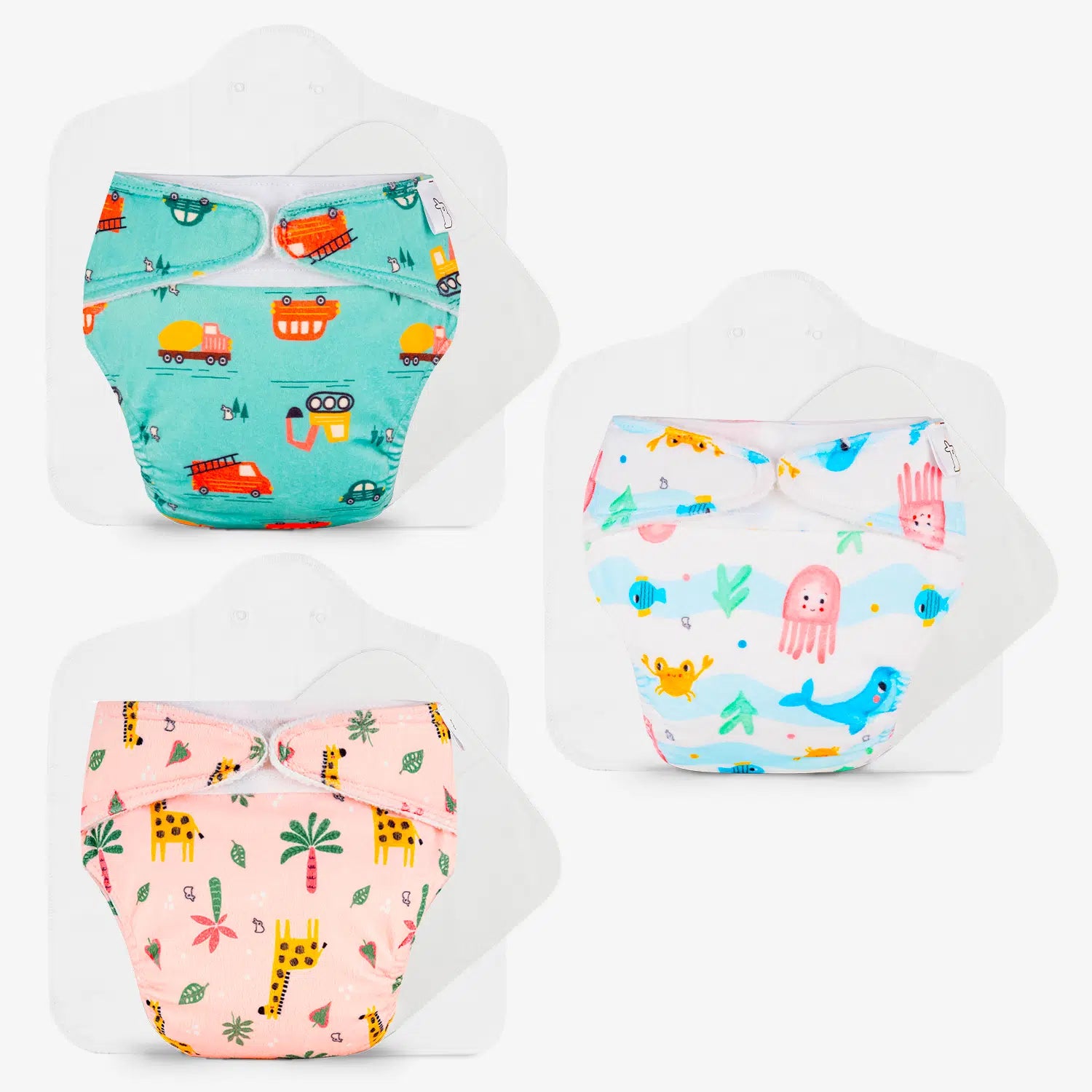
💡 SuperBottoms Pick: Newborn UNO and Freesize UNONewborn UNO is designed for the early months, while Freesize UNO offers an adjustable option for growing babies. Both are reusable alternatives to disposable nappies, so proper washing and drying remain essential. |
Your Cloth Diaper Washing Checklist
Use this quick checklist to keep your routine manageable:
- Remove solid waste before washing.
- Store used diapers safely between washes.
- Run a pre-wash followed by a thorough main wash.
- Use suitable detergent in the correct quantity.
- Avoid fabric softeners unless the manufacturer specifically approves them.
- Check for persistent odour or visible residue.
- Dry all layers completely.
- Inspect elastics, fasteners and waterproof layers regularly.
Following the care label is especially important in India's hot summers and humid monsoon months, when drying times can vary considerably. If diapers remain damp, allow more drying time before storing them.
The CDC's home diaper-changing guidance is a useful reference for safe handling and hand hygiene.

Key Takeaways
- Remove solid waste, pre-wash and complete a thorough main wash.
- Use suitable detergent, avoid unnecessary additives and dry diapers completely.
- Investigate persistent odour or leaks instead of masking the problem with fragrance.
Frequently Asked Questions
1. How often should I wash reusable cloth diapers?
A practical starting point is every one to two days, depending on usage and storage conditions. Avoid leaving soiled diapers unwashed for extended periods.
2. Can I wash cloth diapers with regular clothes?
Follow the diaper manufacturer's instructions. If you wash them with other laundry, ensure the diapers receive an effective wash and are not overcrowded in the machine.
3. How do I remove cloth diaper odour?
Review your storage duration, detergent dosage, pre-wash and main wash. Check water hardness and ensure the diapers dry completely before storage.
4. Should I wash new baby cloth diapers before first use?
Yes. Wash new diapers before use according to their care instructions. This prepares them for use and removes any residue from manufacturing or storage.
Message from SuperBottoms
Hi there, new parents! SuperBottoms brings you doctor-recommended cloth diapers, a trusted rash-free diapering solution specially designed for your baby's sensitive, delicate skin.
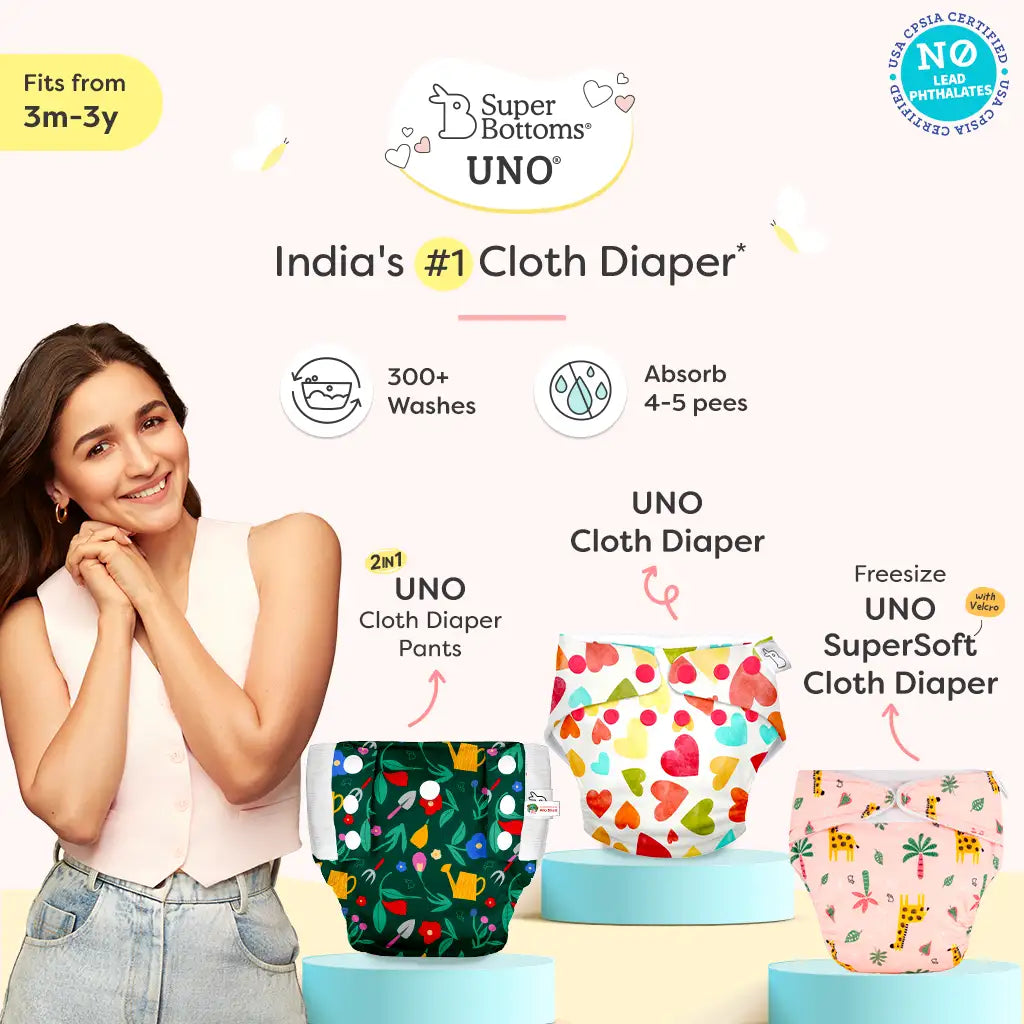
From Newborn UNO and Regular UNO to UNO Luxe, SuperBottoms offers reusable diapering solutions for every stage of your child's growth.
Our range also includes Diaper Pants, DryFeel langots for diaper-free time, Padded Underwear for potty training, as well as SuperSoft Underwear, Cycling Shorts and Joggers for growing kids.
Our collection also includes Period Underwear and bladder-leak solutions for women, along with everyday baby-care essentials.
SuperBottoms products also make thoughtful gifts for babies and new parents - practical, reusable and designed around the real needs of parents.
SuperBottoms products are now available on Amazon, Flipkart, FirstCry, Myntra, Nykaa, Blinkit, and Zepto.