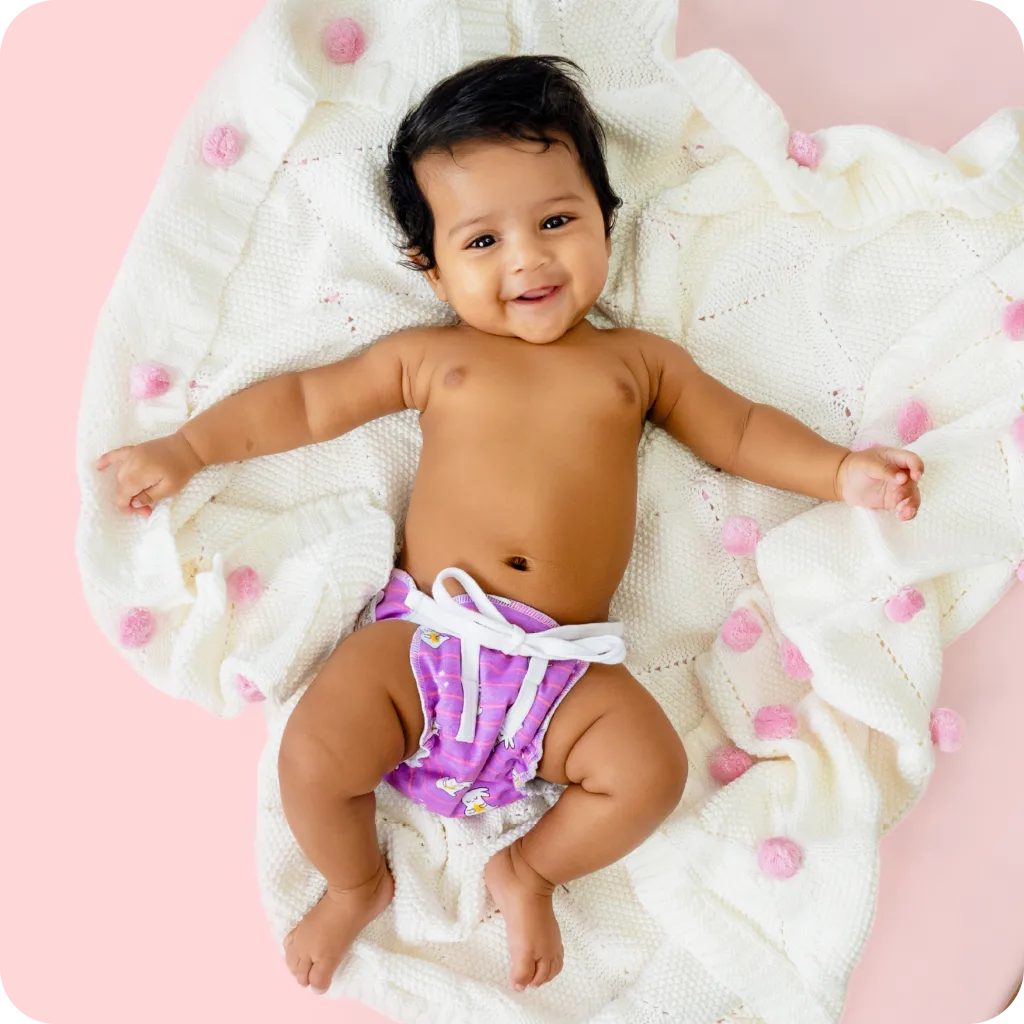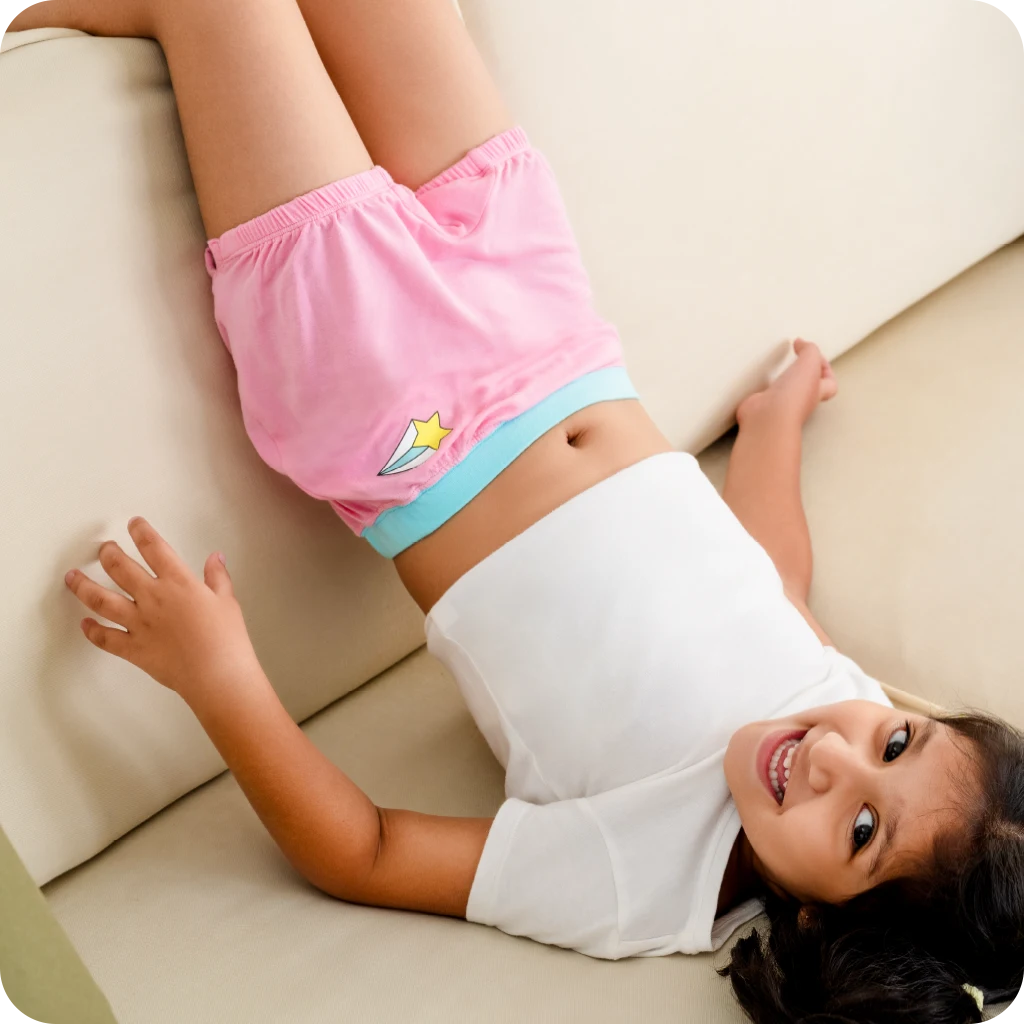







This article covers:
- Understand potty training readiness
- Compare training underwear options
- Choose comfort and protection
- Find the right toddler fit
Potty training underwear can make the transition from diapers to regular underwear easier by offering light accident protection without feeling exactly like a diaper. Padded underwear for toddlers is particularly useful during daytime training, when children are learning to recognise wetness and toilet cues. The right pair should balance comfort, breathability, fit, absorbency and independence, not simply offer maximum leak protection.
What Is Padded Underwear?
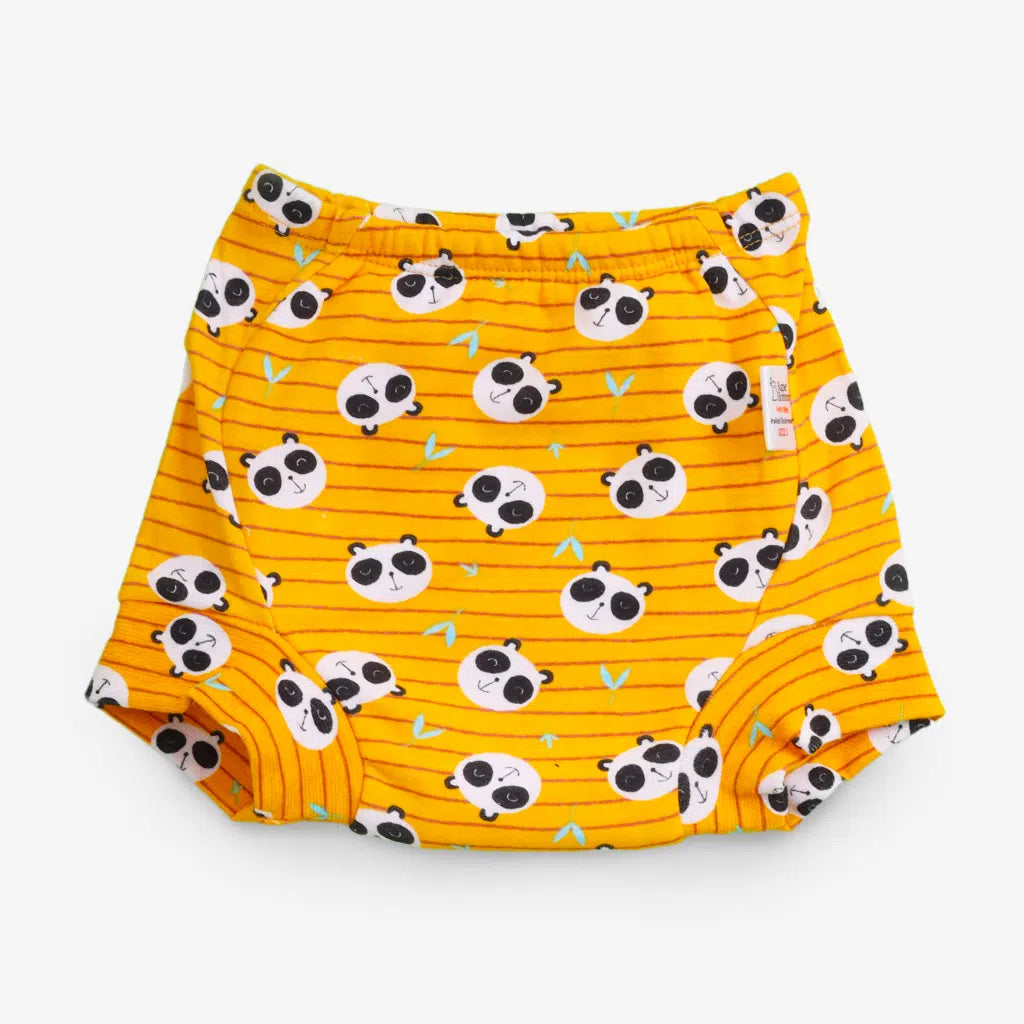
Padded underwear is transitional underwear designed to sit between diapers and regular underwear. It typically has extra padding in the gusset to manage small daytime accidents while allowing a child to experience some wetness.
That distinction matters. Training underwear is not meant to replace active potty teaching or provide diaper-level protection. The American Academy of Paediatrics recommends looking for developmental readiness, including longer dry periods, awareness of bodily signals and the ability to pull clothing up and down.
Expert Answer
The right potty training underwear should support toilet learning rather than replace it. A toddler still needs to recognise body cues, understand what they mean and practise getting to the toilet.
When Is Padded Underwear Useful?
Padded underwear for potty training works best when a child is beginning to move away from diapers but still has occasional daytime accidents.
Look for signs such as staying dry for longer stretches, showing interest in the toilet, communicating when they need to pee, disliking wet diapers and attempting to manage their own clothing. Readiness varies from child to child, so age alone should not determine when training begins.
Parents can also use padded training underwear during playtime, short outings or preschool, while continuing to use a more absorbent option for naps or nighttime if needed.
Expert Insight
Dr Ari Brown, MD, FAAP: Potty training should be guided by a child’s readiness, rather than a fixed age. Signs such as recognising the need to go, managing clothing and showing interest in using the toilet can indicate that a child is ready to begin.
What Parents Should Know
Accidents are a normal part of toilet learning. Training underwear can reduce the mess, but it cannot prevent every accident or teach a child to use the toilet independently.

What Should I Look for When Choosing Padded Underwear?
The best padded underwear balances accident protection with comfort and independence. Before buying, check these five criteria:
1. Skin-friendly fabric
Choose soft, breathable materials suitable for prolonged daytime wear. This is especially useful in India's warm and humid weather.
2. Moderate absorbency
The goal is to handle a small accident, not create a diaper substitute. Excessive absorbency may make the garment feel more like a diaper.
3. Easy pull-on design
A toddler should be able to pull the underwear down and back up with minimal help. This supports self-help skills during toilet training.
4. Secure, comfortable fit
Stretchy waistbands and leg openings should stay in place without feeling restrictive. A poor fit can increase the chances of leaks or discomfort.
5. Washability and value
Toddler potty training can involve frequent changes, so reusable underwear should withstand repeated washing while retaining its shape and softness.
What to Look For
Prioritise absorbency, skin safety, ease of movement and value. The best choice is usually the one that handles small accidents while remaining comfortable enough for everyday training.
Which Type Works Best for Potty Training?
Different options work for different stages:
|
Option |
Accident Protection |
Wetness Awareness |
Reusable |
|---|---|---|---|
|
Regular underwear |
Low |
High |
Yes |
|
Disposable training pants |
High |
Lower |
No |
|
Padded underwear |
Moderate |
High |
Yes |
|
SuperBottoms Padded Underwear |
Up to 1 pee* |
Yes |
Yes |
Product guidance states that SuperBottoms Padded Underwear is designed to hold up to one pee and should then be changed.
For families looking for padded underwear for kids, reusable options can also offer better long-term value than repeatedly purchasing disposable training pants.
Why Choose SuperBottoms Padded Underwear?
Once the selection criteria are clear, SuperBottoms Padded Underwear fits the needs of daytime potty training with a reusable, underwear-style design.
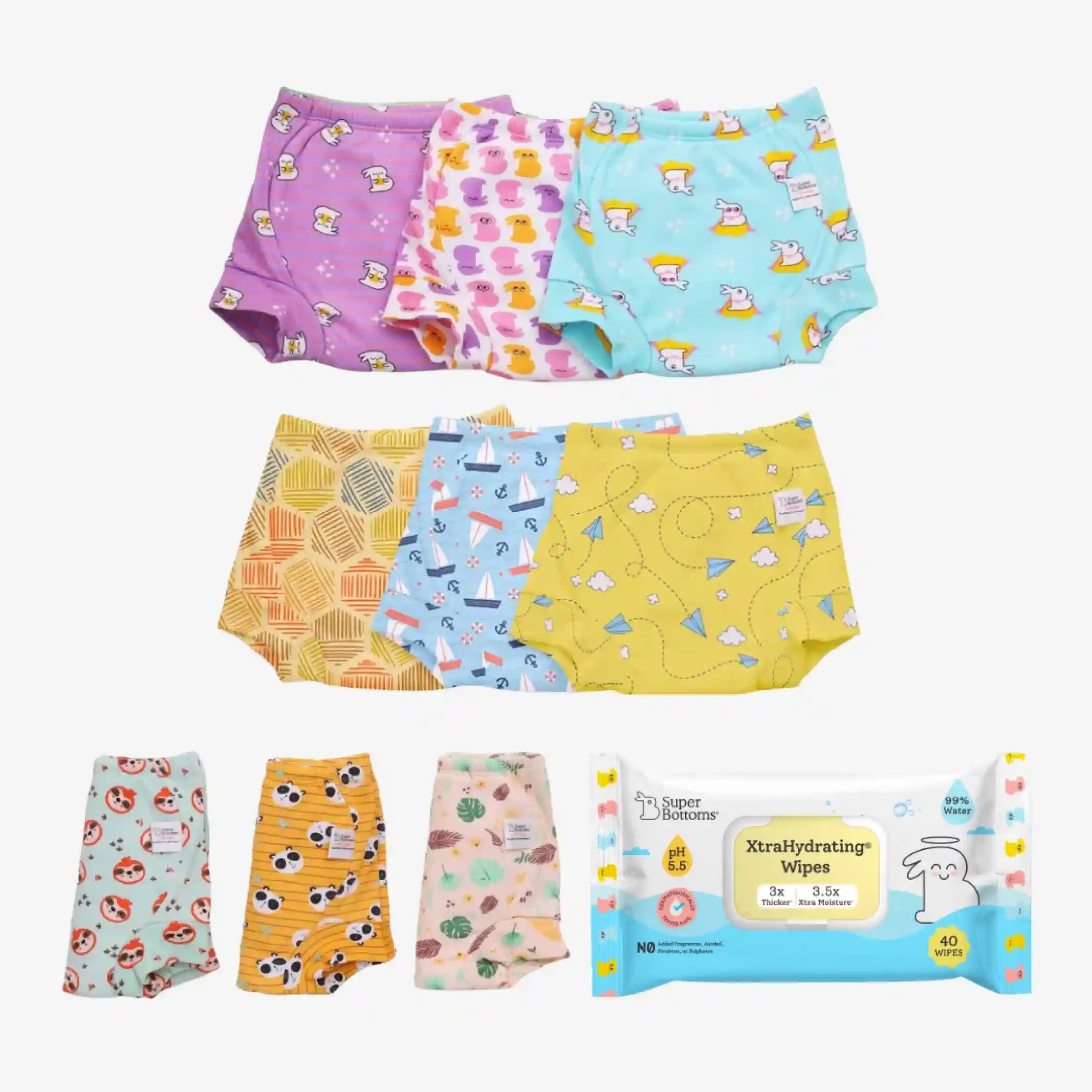
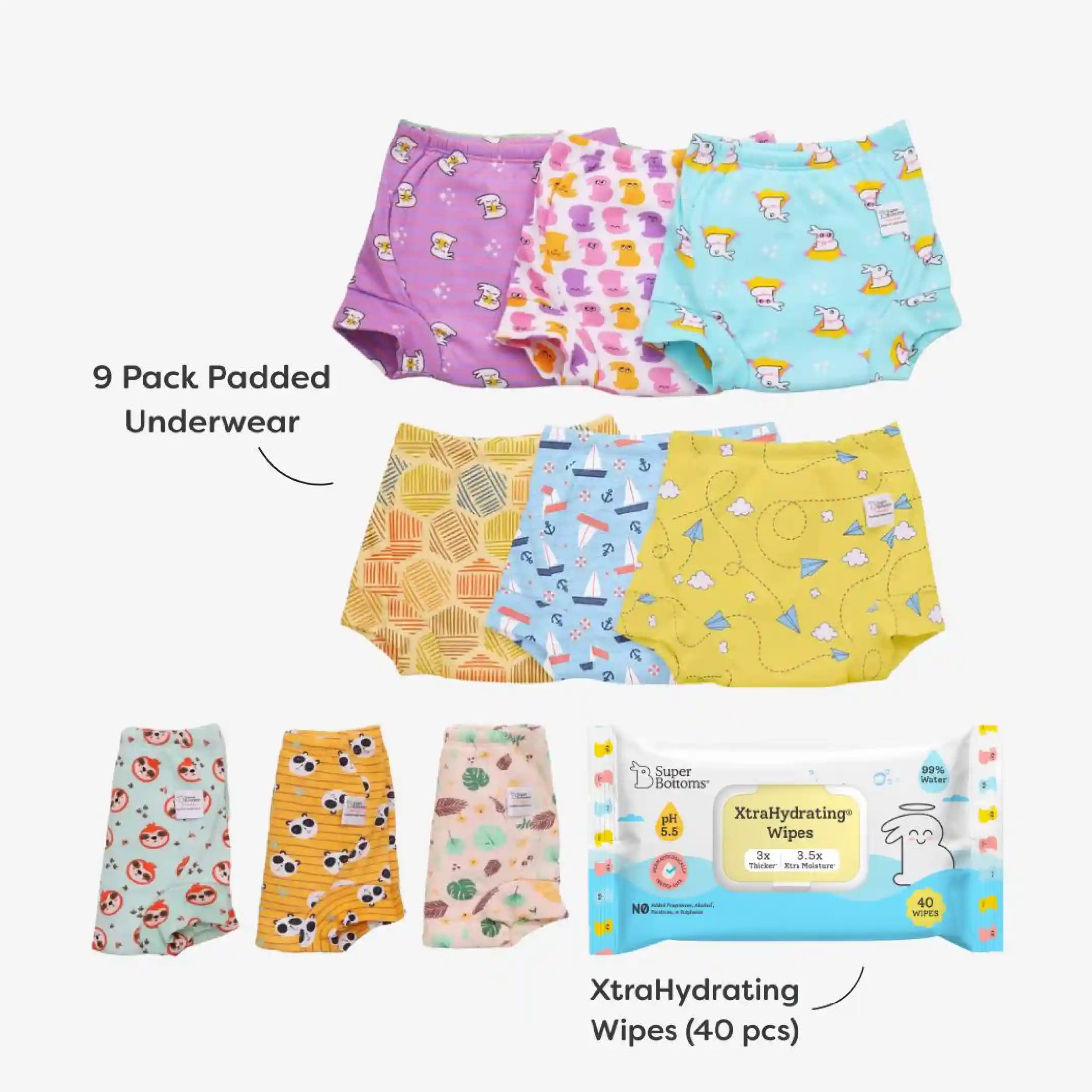
It features three layers of cotton padding, a SuperDryFeel™ layer, a semi-waterproof outer layer and a pull-up design. It is available in four sizes covering approximately 9 months to 4 years.
The important limitation is equally clear: it is not designed for overnight use or prolonged heavy wetting. It works best when the child is actively learning, and parents can change it after an accident.
💡 SuperBottoms PickSuperBottoms Padded Underwear™ is designed to manage small daytime pee accidents while giving toddlers an underwear-like step toward toilet independence. |
A real parent experience reflects the practical side of this balance. Deepa Manghani from Bhopal described the SuperBottoms Padded Underwear as soft and comfortable, while another parent review from Bengaluru highlighted comfort and rash-free wear. These are individual experiences, not guarantees for every child.

How Should You Use It?
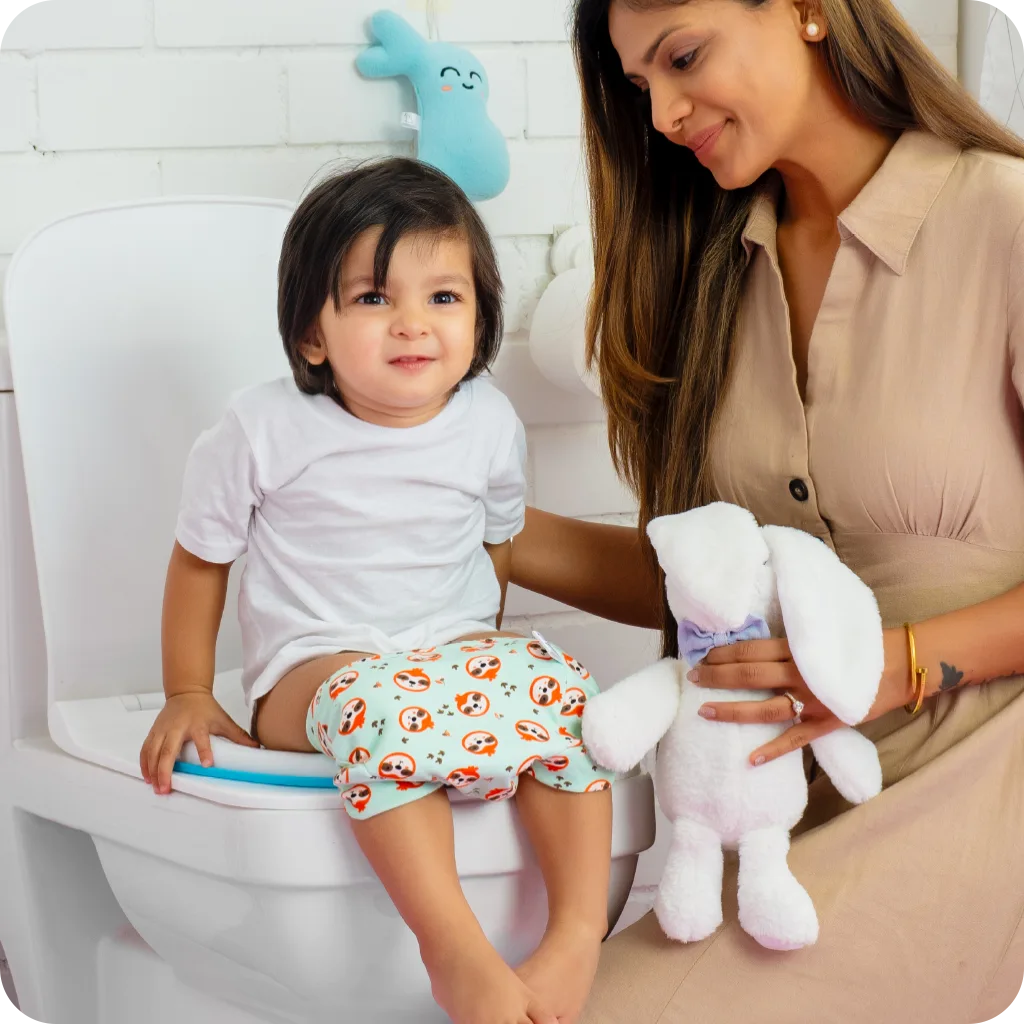
Start with daytime use when your child is showing toilet-readiness signs. Encourage regular potty visits and help your toddler notice what happens when they have an accident.
Keep a few spare pairs available, particularly for outings. After one pee, change the underwear rather than expecting it to function like a full diaper.
For children still using diapers at night, continue using an appropriate overnight option rather than expecting training underwear to provide sustained nighttime protection.
Is Padded Underwear Worth Buying?
Yes, padded underwear for toddlers can be worthwhile when your child is ready for daytime toilet learning and still has occasional accidents.
It provides a practical middle ground: more protection than regular underwear, but a more underwear-like experience than a diaper. Reusable construction can also make it a practical choice for families who expect frequent changes during the training phase.
Potty training becomes easier when the product supports the learning process instead of trying to hide every accident. Padded underwear offers a useful middle step between diapers and regular underwear, particularly for toddlers who are ready for daytime toilet training.
If your child is showing readiness signs and you want reusable accident protection, Padded Underwear by SuperBottoms is designed specifically for this transition.
Key Takeaways
- Choose readiness over a fixed age.
- Look for moderate accident protection.
- Prioritise comfort and easy movement.
FAQs
1. What age is padded underwear suitable for?
There is no universal starting age. Many children show toilet-training readiness between 18 months and 3 years, but developmental signs matter more than age.
2. Is padded underwear better than regular underwear?
For early daytime training, it can be more practical because it offers some protection from small accidents while still allowing wetness awareness.
3. Can padded underwear prevent all leaks?
No. It is designed for small accidents rather than continuous wetting. SuperBottoms recommends changing after one pee.
4. Can I use padded underwear overnight?
It is generally intended for daytime potty training and diaper-free time, not sustained overnight absorbency.
5. Where can I buy padded underwear in India?
If you're wondering where to buy padded underwear, SuperBottoms Padded Underwear is available online through the SuperBottoms website, with multiple sizes and pack options.
Message from SuperBottoms
SuperBottoms creates thoughtfully designed, skin-friendly essentials for growing babies and kids, including Cloth Diapers, Diaper Pants, DryFeel Langots, Padded Underwear, SuperSoft Underwear and Kids’ Joggers, made for comfortable, practical and sustainable everyday parenting.