





In this article, you will learn:
- Understand elimination communication for babies
- Recognise baby potty cues
- Start EC gently and practically
- Combine EC with diapers
- Know when toddlers need potty training
If your baby seems to have a predictable pee or poop pattern, you may wonder whether you can respond before the diaper gets wet. Elimination Communication (EC) is an approach where caregivers observe a baby's natural cues and timing and offer a potty or toilet when they think the baby needs to eliminate.
EC is different from expecting an infant to have independent bladder control. For most families, it works best as a responsive practice rather than a race to become diaper-free.
What is elimination communication?
Elimination Communication is a caregiver-led approach to infant toileting. Parents observe patterns such as facial expressions, body movements, sounds and timing, then offer the baby an appropriate place to pee or poop. The American Academy of Family Physicians notes that EC has been used in many cultures, but its effectiveness has not been well studied.
What parents should know
EC is about recognising and responding, not expecting a young baby to consciously hold urine or stool. Independent toilet use requires a combination of body awareness, communication, motor skills and willingness that develops over time.
How can you recognise baby potty cues?
Every baby is different, so observation is more useful than looking for one universal signal.
Common cues may include
- Grunting or straining
- Suddenly becoming still or restless
- A particular facial expression
- Squatting or changing posture
- Crying or fussiness
- Peeing or pooping at predictable times
- Needing to go after waking or feeding
Timing can become particularly useful once you observe your baby for several days.
Expert perspective
Dr Jenelle Ferry, M.D., neonatologist and Director of Feeding, Nutrition and Infant Development at Pediatrix Neonatology of Florida, explains that EC relies on infant reflexes and cues and does not create bowel and bladder control during infancy. She also cautions against trying to achieve complete potty training too early.
How do you start elimination communication?
You do not have to switch completely from diapers to EC overnight. A part-time or hybrid approach can be easier for many families.
|
Approach |
What it looks like |
Best suited for |
|---|---|---|
|
Part-time EC |
EC at selected times, diapers otherwise |
Busy families |
|
Full-time EC |
EC is the main toileting approach |
Families able to observe closely |
|
Hybrid |
EC followed by conventional toddler potty training |
Families wanting flexibility |
A simple way to begin
1. Observe first.
Spend a few days noticing when and how your baby eliminates.
2. Identify predictable opportunities.
Try offering the potty after waking, after feeds or when you notice a familiar cue.
3. Use a consistent sound or phrase.
A simple cue can help create an association with the act of eliminating.
4. Keep the experience calm.
If your baby resists, stop and try again later. EC should not become a struggle.
5. Keep a backup.
Diapers or reusable diapering options can make EC practical for outings, naps, nights and missed cues.

Is EC better than traditional potty training?
Not necessarily. They are simply different approaches.
Traditional potty training generally happens when a child is developmentally ready to recognise bodily signals, understand what they mean, get to the toilet and participate in the process. EC begins much earlier and relies more heavily on the caregiver recognising cues.
The practical choice depends on your baby's stage, your routine and how much time you can realistically give the process.
What about accidents and nighttime EC?
Accidents are expected. Missing a cue does not mean EC has failed.
For nighttime, sleep should remain a priority. You do not need to wake a baby repeatedly just to maintain EC. Using a diaper as a backup overnight can make the approach more sustainable.
If your child later begins conventional potty training, remember that daytime and nighttime dryness can develop at different times. Pressure can also contribute to stool withholding and constipation, so avoid forcing a child to sit on the potty.
Parent Checklist
☐ Observe your baby's elimination patterns
☐ Identify recurring cues
☐ Try EC at predictable times
☐ Use one simple verbal cue
☐ Keep diapers as a backup
☐ Never force a resistant baby
☐ Keep nights focused on sleep
☐ Transition to toddler-led potty training when developmentally appropriate
What can parents use during EC?
The right backup depends on your baby's age and stage.
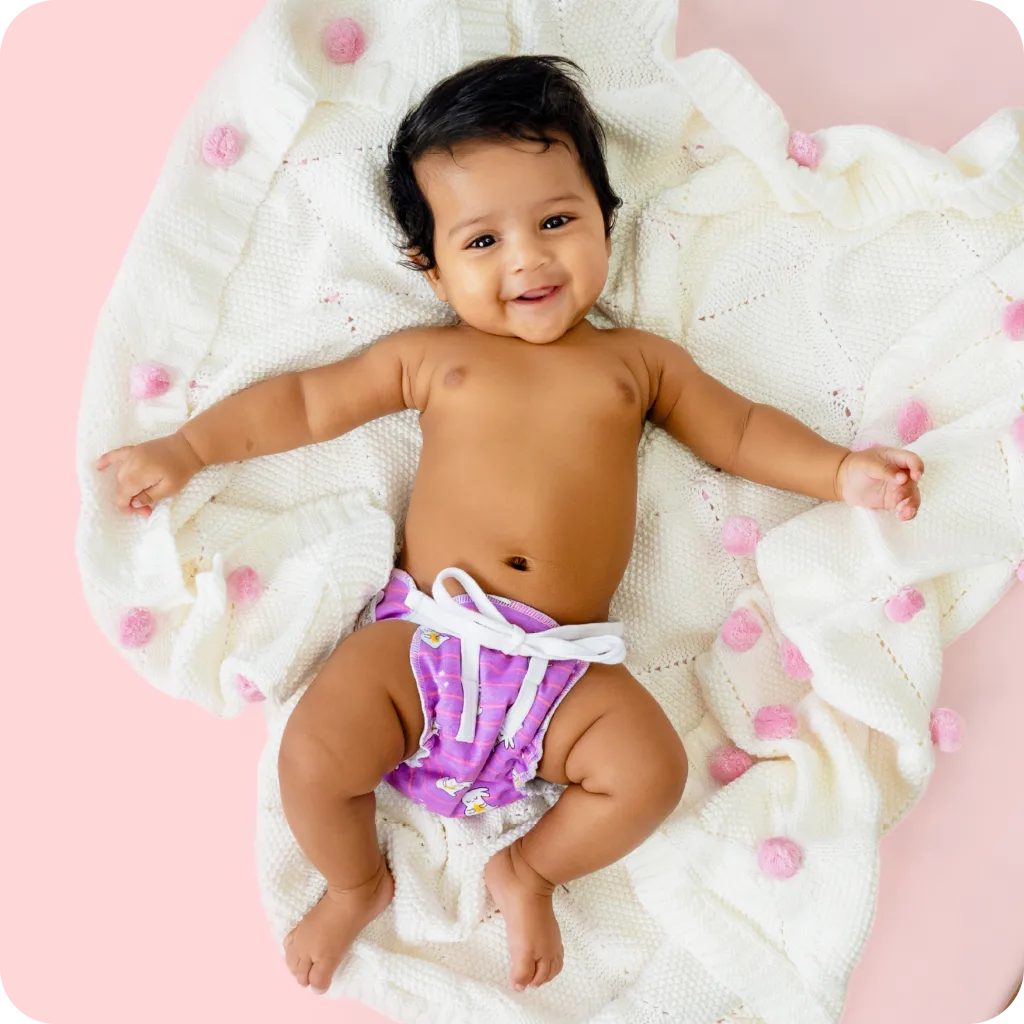
For younger babies doing diaper-free time, a product such as a DryFeel Langot can be considered as a practical diaper-free-time option.
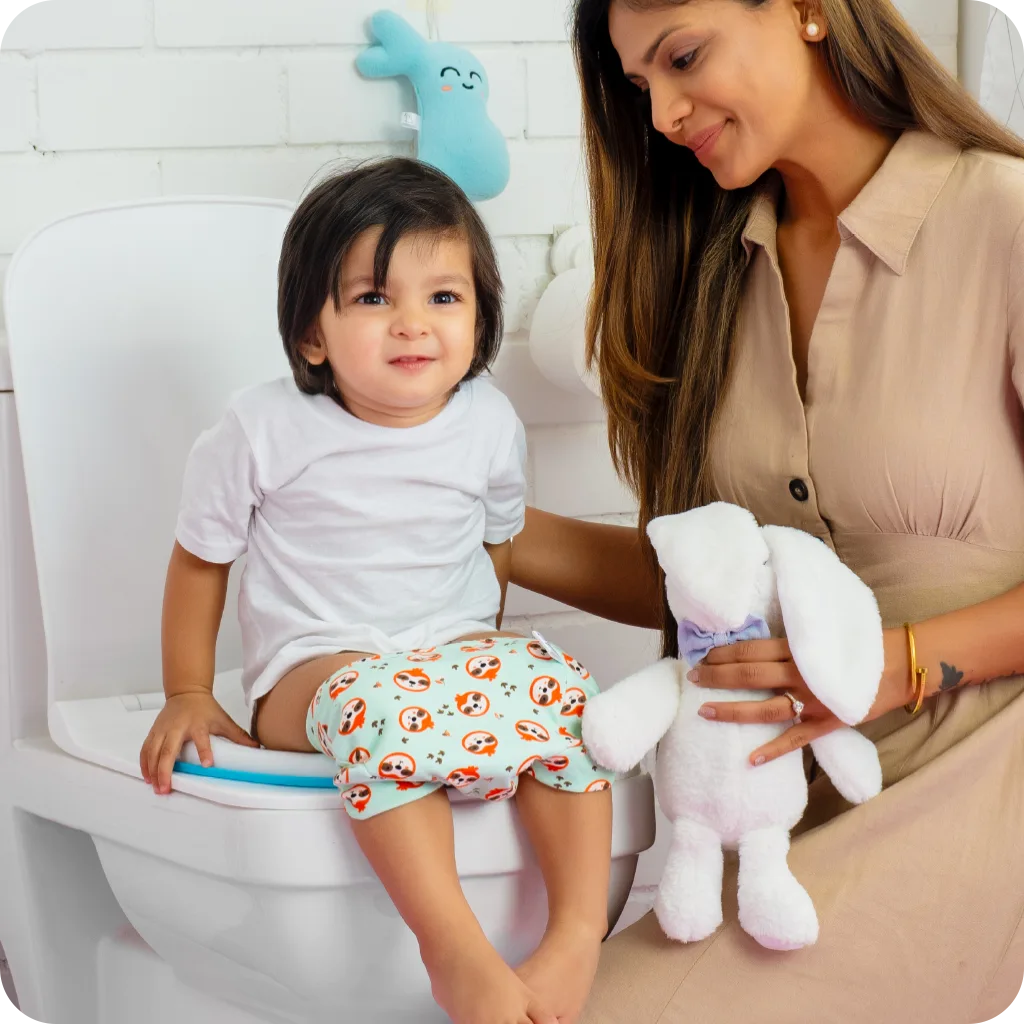
Once a child is moving toward conventional potty training, Padded Underwear can become more relevant. SuperBottoms Padded Underwear is designed for children approximately 9 months–4 years and provides three layers of padding to help manage small daytime accidents while allowing children to practise pulling underwear up and down. It is a training aid, not an overnight diaper.

What should you look for in potty-training underwear?
Prioritise:
- Comfortable fit
- Easy pull-up/pull-down design
- Soft, breathable materials
- Light accident protection
- Easy washing
- Appropriate age and size
- Clear daytime/nighttime limitations
What is the practical approach to EC?
Problem: You want to respond to your baby's elimination needs without making toileting stressful.
Solution: Start with observation, offer the potty at predictable times, and use EC as a flexible practice rather than a deadline.
Why it helps: It gives caregivers a structured way to notice patterns while keeping the baby's normal development at the centre.
EC does not have to mean being completely diaper-free. For many families, a flexible combination of EC, diapers and later toddler potty training is the most practical route.
Elimination Communication can be a gentle way to become more responsive to your baby's natural elimination cues. The key is to treat it as communication, not a race to toilet independence.
Start by observing, respond to patterns, stay flexible and keep pressure out of the process.
Key Takeaways
- EC starts with observation, not pressure.
- Babies still need time to develop independent toilet skills.
- A flexible EC-plus-diaper approach can work well.
FAQs
Can elimination communication start from birth?
EC can be practised during infancy, including from birth, but it should be understood as caregiver-assisted toileting rather than independent bladder control.
Is elimination communication the same as potty training?
No. EC relies heavily on caregivers recognising infant cues, while conventional potty training involves a child's developing ability to recognise, communicate and act on the need to use the toilet.
Can I use diapers while practising EC?
Yes. A part-time or hybrid approach can combine EC with diapers, particularly for sleep, travel, childcare or situations where responding to cues is difficult.
Are padded underwear suitable for EC?
Padded underwear or potty training pants are more relevant once a child is moving toward toddler potty training and underwear use. It can help manage small daytime accidents but should not be treated as a replacement for a diaper or potty practice.