






What this article covers
- Potty readiness comes before training.
- Every child learns at their pace.
- Parents share practical potty training tips.
- Padded Underwear supports daytime learning.
- Accidents are part of toilet learning.
Potty training can feel like a big milestone. One day your toddler is happily running around in diapers, and the next, you’re wondering whether to introduce a potty, switch to underwear or wait a little longer.
Many parents experience the same mix of excitement, confusion and messy accidents. The good news? There is no single right way to learn. The best approach is one that suits your child’s readiness and your family’s routine.
When should you start potty training?
Most children begin showing signs of readiness between 18 and 24 months, but some are ready later. Age is only one factor. Children need physical control, communication skills and a willingness to participate.
Potty readiness checklist
- Stays dry for around two hours.
- Shows awareness before peeing or pooping.
- Can walk to the potty and sit down.
- Understands simple instructions.
- Can help pull clothes down and up.
- Shows interest in the toilet or big-kid underwear.
The American Academy of Paediatrics explains that toilet learning depends on physical, cognitive and emotional development. A child may be ready in one area but still need time in another. HealthyChildren.org
What do parents say about potty training?
Every family’s experience is different, but a few common lessons emerge from everyday parenting.
1. “I waited until my child was ready”
Some parents start because other children in their circle are already toilet trained. But comparing timelines can create unnecessary pressure.
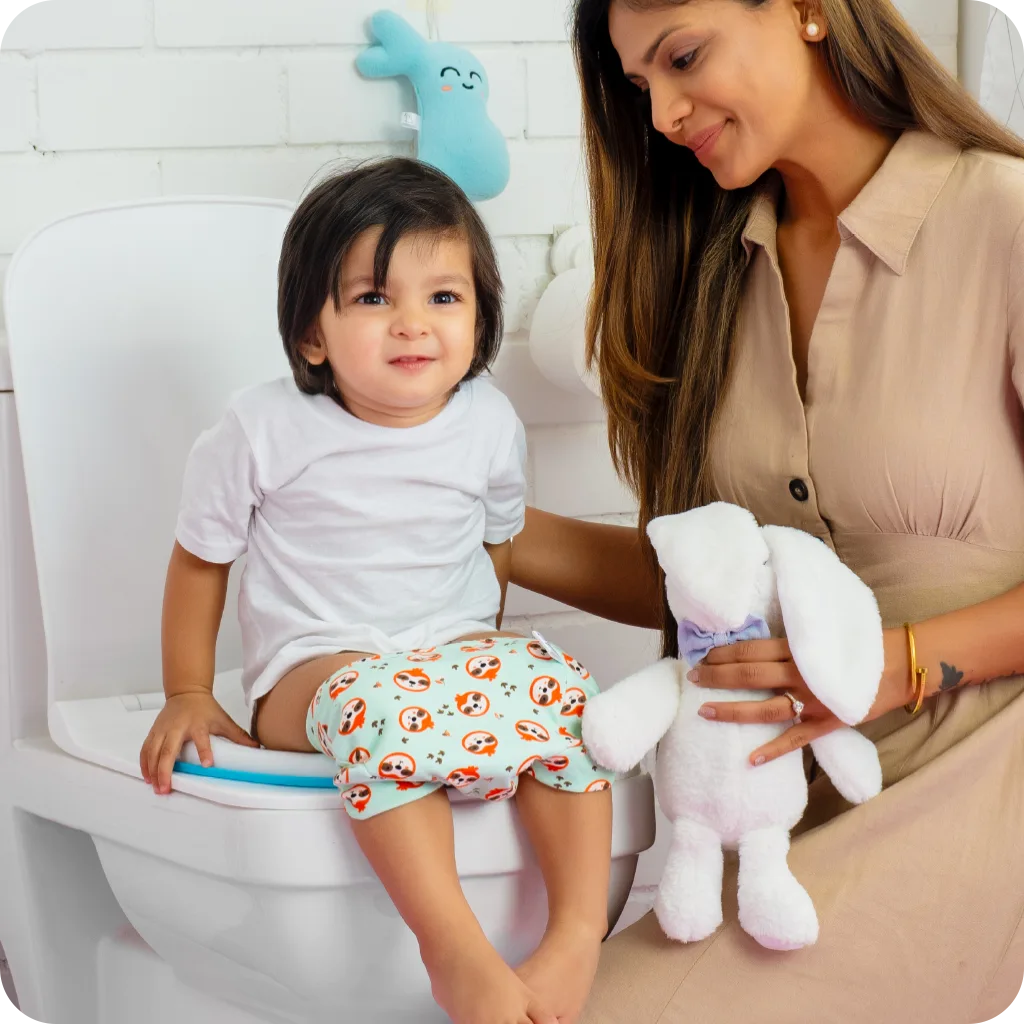
A child who resists the potty may simply need more time. Parents often find that introducing the potty gently, without forcing the child to sit, makes the process less stressful.
What parents should know
Potty training is a developmental process, not a race. A toddler’s readiness and willingness matter more than meeting a particular age deadline.
2. “We made the potty part of our routine”
Rather than asking repeatedly, “Do you want to pee?”, parents can introduce predictable potty moments:
- After waking up.
- Before a bath.
- Before leaving home.
- Before bedtime.
- When the child shows signs of needing to go.
A small potty, a footstool and comfortable clothing can help a child participate independently.
The goal is to make the bathroom familiar—not turn every visit into a test.

3. “Accidents happened, and that was okay”
Accidents are a normal part of learning. Toddlers are still learning to recognise body signals, pause their play and reach the toilet. Instead of scolding, parents can calmly say, “Your clothes are wet. Let’s get changed,” and help the child understand. Avoid punishment, shame or comparing the child with siblings and friends. Encouragement works better than pressure.
How do you potty train a baby or toddler?
To start baby potty training, wait for readiness signs, introduce the potty calmly, explain body signals and build a predictable routine. Help your child practise using the toilet without pressure. Use comfortable clothing and prepare for accidents. Progress may take weeks or months, and children learn at different speeds.
A simple 5-step potty training approach
Step 1: Introduce the potty - Let your child explore and explain its purpose.
Step 2: Build body awareness - Teach “pee” and “poop” and notice cues.
Step 3: Practise gently - Offer potty time without pressure.
Step 4: Encourage independence - Let your toddler practise sitting and washing hands.
Step 5: Handle accidents calmly - Keep spare clothes ready and treat accidents as learning.
Which underwear is better during potty training?
Parents often compare regular underwear, potty training pants and padded underwear for potty training. Each option serves a different purpose.
|
Option |
Best suited for |
What to consider |
|---|---|---|
|
Regular underwear |
Children gaining confidence with toilet use |
Comfortable, but offers little protection from accidents |
|
Potty training pants |
Toddlers practising daytime toilet use |
Familiar underwear feel; protection varies by design |
|
Padded Underwear |
Daytime practice with occasional accidents |
Look for comfortable fit and appropriate absorbency |
|
Diapers |
Children not yet ready or during certain situations |
Continue when needed; readiness should guide the transition |
What to look for
Potty training underwear should be comfortable, easy to pull down, suitable for the child’s size and practical for the family’s washing routine. Padded underwear can help manage small daytime accidents, but it does not replace learning to recognise the urge to use the toilet.
How can Padded Underwear help?
Once a child begins showing interest in underwear, a padded option can make the transition feel more like wearing regular underwear.
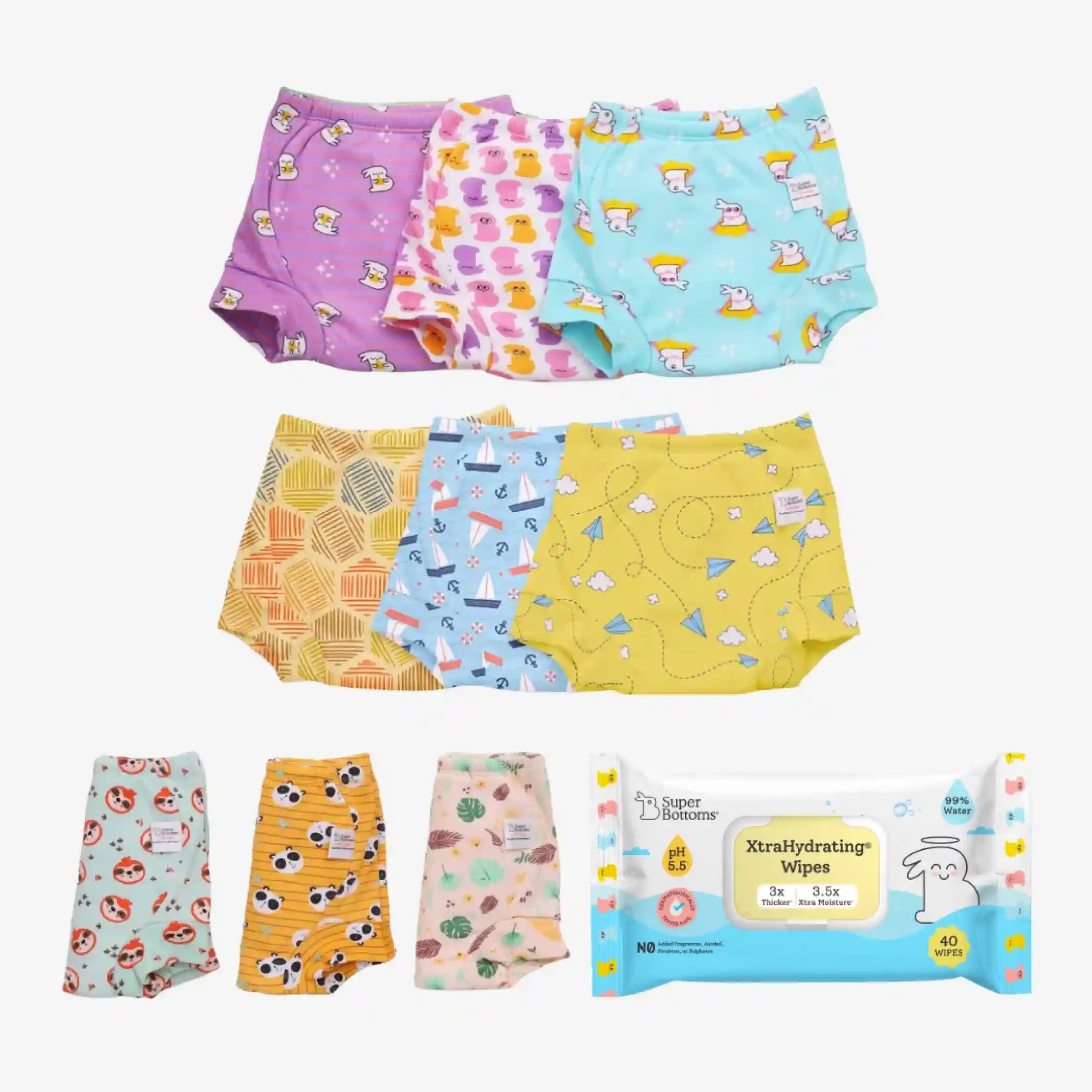
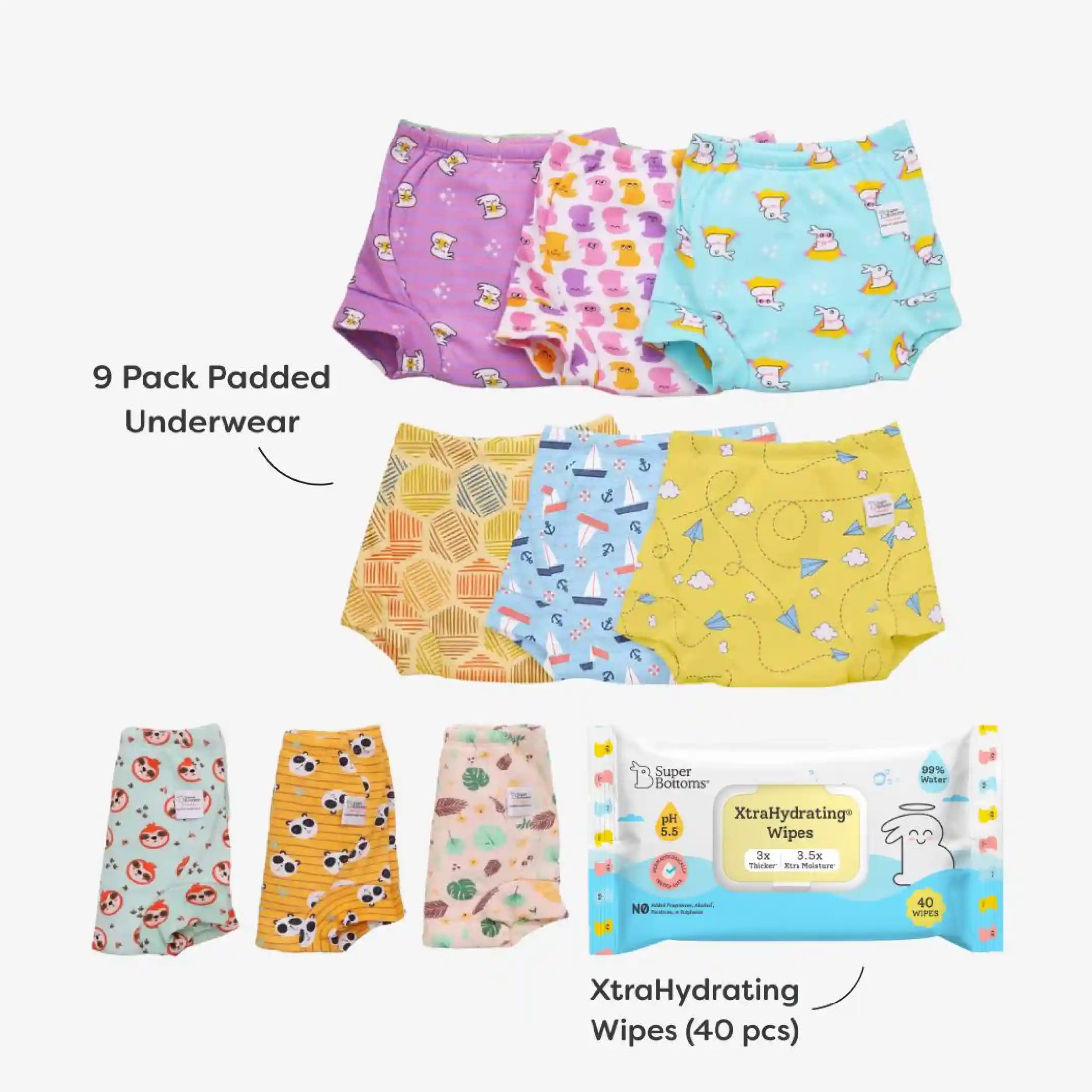
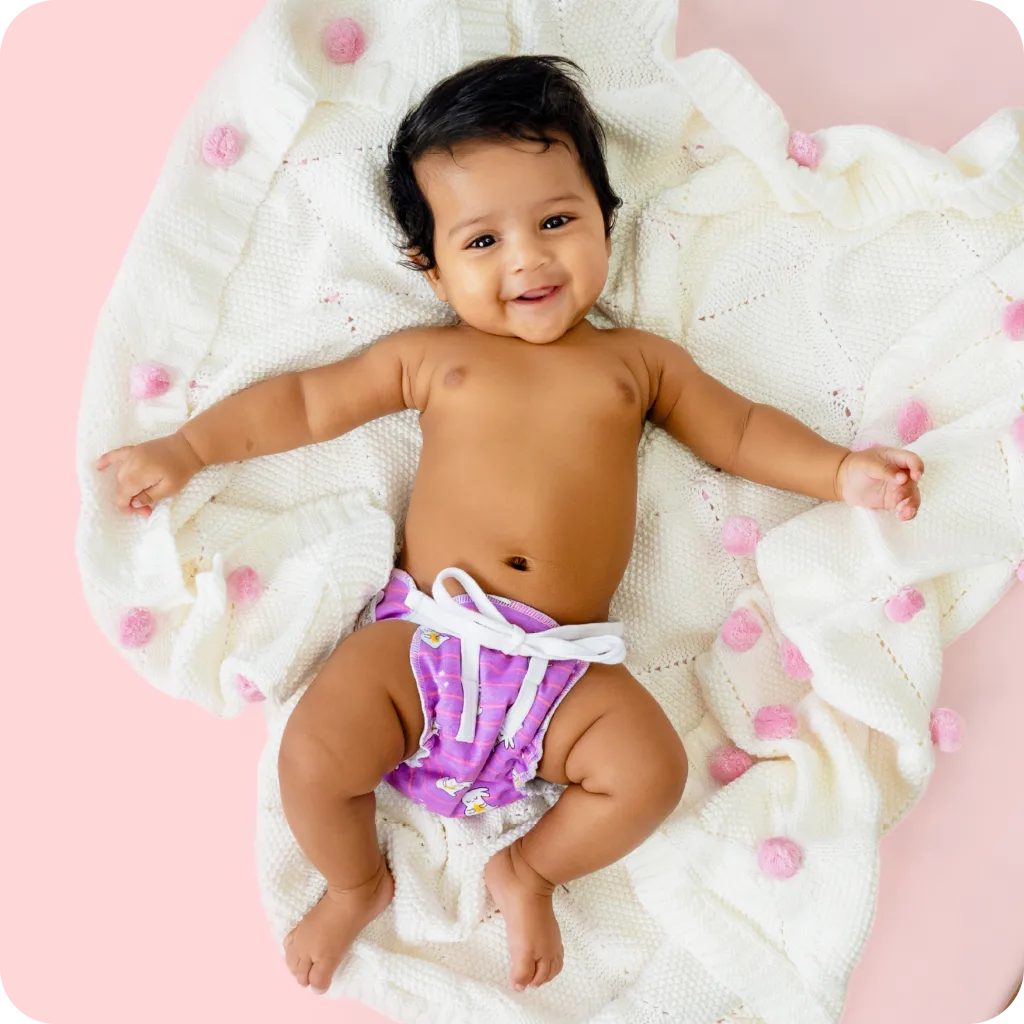
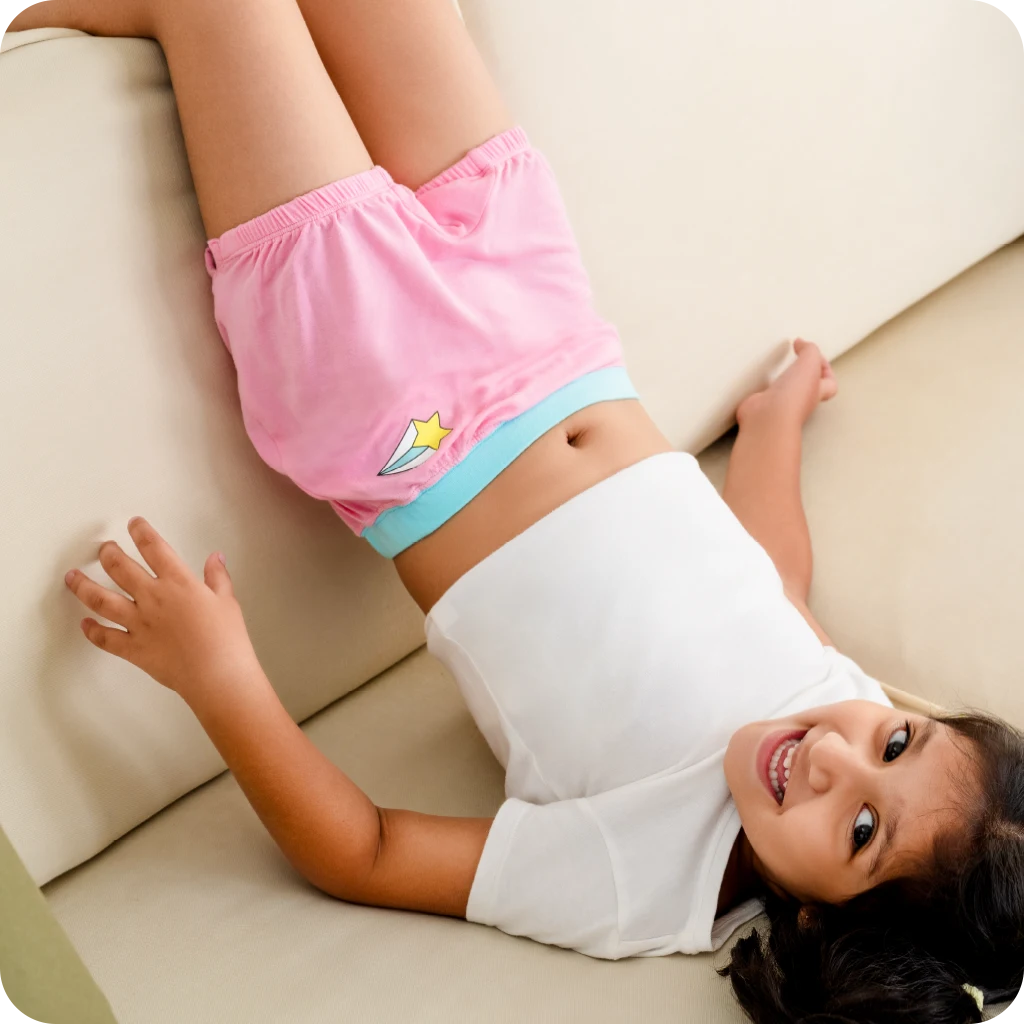
💡 SuperBottoms Pick - SuperBottoms Padded UnderwearSuperBottoms Padded Underwear is designed for toddlers and young children during daytime potty training. It has three-layer cotton padding, a semi-waterproof outer and SuperDryFeel fabric. |
What parents should know
- Suitable for children from 9 months to 4 years.
- Holds up to one accidental pee.
- Not designed for overnight use, heavy wetting or swimming.
- Needs changing after every pee.
- Choose the right size for a comfortable fit.
The practical benefit is that children can experience wearing underwear while parents have some support for small daytime accidents. It is not a substitute for a diaper or a solution for every stage of toilet learning.
What should parents look for when buying potty training underwear?
- Fit & comfort: Comfortable, without restricting movement.
- Breathable fabric: Cotton-rich materials for everyday comfort.
- Protection: Suitable absorbency for small accidents.
- Easy to use: Simple for toddlers to pull down.
- Washability: Reusable and easy to maintain.
- Right size: Follow the product’s size guide.
Parent checklist for toilet learning
- Check whether your child shows readiness signs.
- Introduce the potty without pressure.
- Keep the bathroom accessible.
- Choose easy-to-remove clothing.
- Keep spare clothes nearby.
- Use calm language after accidents.
- Choose suitable underwear for daytime practice.
- Ask your paediatrician about persistent concerns.
Toilet learning is not about getting everything right from day one. Some children learn quickly, while others need more time, practice and reassurance. Follow your child’s cues, keep the process positive and choose products that support your routine.

Key takeaways
- Start potty training when your child shows readiness, not because of comparisons.
- Keep routines predictable and accidents calm.
- Choose comfortable, suitable underwear for daytime learning.
FAQs
1. What is the best age for potty training?
Many children show readiness between 18 and 24 months, but some begin later. Look for developmental signs rather than relying on age alone.
2. Is padded underwear good for potty training?
Padded underwear can help manage small daytime accidents while a child learns to use the toilet. Check the product’s absorbency and limitations.
3. Can toddlers wear Padded Underwear overnight?
SuperBottoms Toddler Padded Underwear is not designed for overnight use or heavy wetting. Choose an option suited to your child’s needs.
4. How long does potty training take?
There is no fixed timeline. Children develop bladder control, communication and independence at different rates. Consistency and patience can help.